
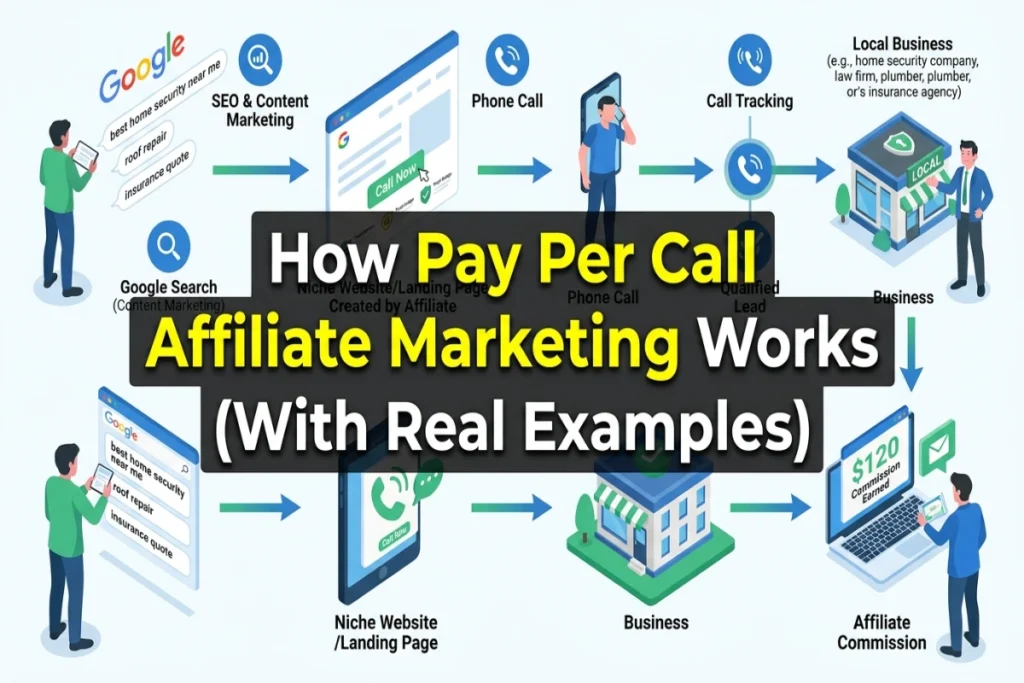
Affiliate marketing has evolved far beyond earning commissions from product purchases. One of the fastest-growing and highest-paying models today is Pay Per Call affiliate marketing, where affiliates are paid for generating qualified phone calls instead of online sales or form submissions.
Unlike traditional affiliate marketing, where commissions often range from $5 to $100 per sale, Pay Per Call campaigns can pay $20 to $500+ per qualified call, depending on the industry.
But how exactly does Pay Per Call affiliate marketing work?
In this guide, you’ll learn the entire process—from choosing an offer and generating phone calls to getting paid—along with real-world examples, industry insights, and best practices for beginners.
What Is Pay Per Call Affiliate Marketing?
At its core, Pay Per Call affiliate marketing is a performance-based advertising model where publishers (affiliates) earn attractive commissions by routing inbound phone calls to businesses.
Unlike traditional affiliate setups that require a user to click a link and complete an online purchase, Pay Per Call affiliate marketing shifts the focus entirely to live voice conversations. Your primary goal as an affiliate is to leverage targeted promotional strategies to connect motivated prospects directly with service providers or sales teams using a unique, trackable phone number.
How the Model Works: Meeting the Quality Standards
Advertisers do not pay for just any random dial. Because phone routing costs money and requires human staff, a call must fulfill pre-determined quality metrics set by the merchant or affiliate network before a payout is triggered.
Typically, a successful conversion under the Pay Per Call affiliate marketing framework requires the call to meet these specific parameters:
Duration Thresholds: The conversation must last for a minimum duration—usually between 60 to 120 seconds—ensuring the caller didn’t just dial by mistake.
Geographic Restrictions: The lead must originate from an approved country, state, or region where the business operates.
Unique Callers: Payouts are generally restricted to first-time callers rather than existing customers looking for support.
High Commercial Intent: The dialogue must show a genuine interest in buying a product or booking a service.
The Triple-Win Ecosystem
When executed correctly, Pay Per Call affiliate marketing establishes a highly efficient marketplace that rewards every participant involved:
For Businesses: Brands receive filtered, exclusive, hot leads who are actively looking to speak with a representative, resulting in significantly higher conversion rates than standard web traffic.
For Affiliates: Marketers unlock access to massive payout structures. Because a live phone call represents a premium lead, commission rates in Pay Per Call affiliate marketing are often substantially higher than typical pay-per-click or pay-per-lead programs. according to performance marketing insights from platforms like Invoca, inbound calls possess an incredibly high conversion rate compared to digital channels.
For Customers: Consumers receive immediate, real-time assistance right at their peak point of interest, skipping the frustration of waiting days for an email response
The Pay Per Call Affiliate Marketing Process
While establishing an inbound call generation business can seem highly technical at first glance, it operates on a remarkably systematic workflow. By understanding each phase of this pipeline, digital marketers can effectively scale campaigns, streamline lead distribution, and maximize revenue.
Below is an in-depth look at how the Pay Per Call affiliate marketing framework functions from initial setup to final payout.
Step 1: Join a Specialized Affiliate Network
Your journey begins by partnering with a specialized network that acts as a bridge between corporate advertisers and digital publishers. These platforms curate hundreds of inbound campaigns across various high-value industries.
Instead of pitching individual businesses one by one, joining an established performance network gives you immediate access to vetted offers in highly lucrative verticals. Some of the most profitable categories dominating Pay Per Call affiliate marketing include:
Legal Services: Personal injury, mass torts, and criminal defense.
Home Improvement: Emergency plumbing, roofing, pest control, and HVAC repair.
Insurance: Auto, health, life, and Medicare assistance.
Financial Services: Debt settlement, mortgage refinancing, and IRS tax relief.
Healthcare & Travel: Inpatient addiction treatment, medical alerts, and airline bookings.
Once the network reviews and approves your application, you gain entry into their campaign dashboard to browse live offers.
Step 2: Evaluate and Select Your Campaign Offer
Every campaign features a unique set of guidelines, demographic restrictions, and payment structures established by the advertiser. Success in Pay Per Call affiliate marketing requires a meticulous review of these parameters before allocating ad spend or SEO efforts.
A standard campaign profile generally outlines:
Commission Amount: The fixed dollar amount paid per successful connection.
Call Duration Requirements: The exact buffer time required to trigger a payout.
Target Geography: Approved countries, states, or zip codes.
Allowed Traffic Channels: Authorized promotional methods (e.g., search ads, organic SEO, or social media).
Business Operating Hours: The active hours during which the advertiser’s call center accepts inquiries.
Daily Caps: The maximum number of billable leads an affiliate can route per day.
Practical Offer Example: Personal Injury Campaign
Payout: $120.00 USD per qualified call.
Criteria: Inbound dials must originate exclusively from the United States, last for a minimum duration of 90 seconds, route during standard eastern business hours, and come from unique, first-time callers.
When your marketing efforts yield a lead that satisfies all of these conditions, the commission is successfully generated.
Step 3: Secure Your Unique Tracking Phone Number
Once you are approved for a specific campaign, the network issues you a unique tracking phone number (typically a toll-free or localized number). This number serves as your digital fingerprint within the ecosystem.
Advanced platform integrations—such as call intelligence software provided by Ringba—automatically attribute inbound data back to your publisher account. These systems log critical metadata, including:
The traffic source or campaign creative that prompted the user to call.
The exact duration of the live conversation.
The caller’s regional geographic location.
The ultimate conversion and qualification status.
This seamless attribution gives corporate buyers total transparency into exactly which marketer generated each high-intent conversation.
Step 4: Launch Strategic Promotional Campaigns
With your tracking infrastructure established, the next phase involves deploying targeted marketing strategies to drive inbound phone traffic. Affiliates generally lean into three primary user-acquisition channels:
1. Search Engine Optimization (SEO)
Publishing highly optimized, localized articles targeting transactional keywords is an incredibly reliable organic method. Common search queries with high intent include:
“Emergency plumber near me”
“Best tax relief services close by”
“Top-rated car accident lawyer”
“Medicare insurance help lines”
Mobile readers discovering your content during an urgent crisis can initiate a voice call with a single tap on their smartphone screen.
2. Google Ads & Search Marketing
Running paid search ads against high-intent keywords is a core pillar of modern Pay Per Call affiliate marketing. When a user types a query like “24-hour plumbing service” directly into a search engine, they are actively looking to solve a problem immediately. Displaying a prominent click-to-call ad at the top of search results generates highly valuable, rapid connections.
3. Social Media Advertising (Facebook & Instagram Ads)
Visual and demographic targeting via social networks works exceptionally well for lifestyle-driven or consultative industries, such as senior health insurance, home remodeling services, or credit repair consultations.
The Role of High-Converting Landing Pages
To optimize conversion rates, elite marketers rarely send cold traffic directly to a raw phone number. Instead, they direct users to an optimized landing page designed to pre-qualify the lead and build trust. These high-performing landing pages typically feature:
A clear breakdown of consumer benefits and competitive advantages.
Authentic customer testimonials and visible trust badges.
An explicit call-to-action (CTA) urging the visitor to dial immediately.
Fully optimized click-to-call functionality for seamless mobile navigation.
Step 5: Route the Prospect to the Business Call Center
The moment a prospect dials your assigned tracking number, the platform routes the connection instantly to the advertiser’s chosen call center or sales department.
The customer bypasses digital forms and connects directly with an active professional, such as:
Bilingual sales executives or intake specialists.
Retained attorneys or paralegals.
Licensed insurance brokers or independent agents.
Certified home service providers or field dispatchers.
Once the system successfully bridges the prospect to the business, your primary role as an affiliate marketer is complete.
Step 6: Automated Real-Time Call Tracking
Simultaneously behind the scenes, sophisticated analytics platforms monitor the live connection. This infrastructure keeps an immutable ledger of administrative data points, recording:
Inbound Caller ID and metadata.
The precise call duration down to the second.
Audio recordings (wherever legally permissible under state and federal consent laws).
The caller’s mobile carrier, device type, and operational timestamp.
This granular tracking data ensures total operational transparency, prevents attribution fraud, and protects the revenue streams of performance publishers.
Step 7: Post-Call Qualification Analysis
Not every phone connection results in an instant payout. Advertisers utilize automated evaluation criteria to verify that the lead fully complies with the initial campaign rules.
The advertiser’s accounting system assesses whether the interaction met all qualification metrics:
[Inbound Dial] ➔ [Duration Checked (>90s?)] ➔ [Location Vetted?] ➔ [First-Time Caller?] ➔ [Commission Qualified]
If the conversation crosses the required time threshold and represents a legitimate consumer inquiry from an approved region, the lead status changes to “Qualified.”
Step 8: Secure Affiliate Payout Processing
Once the network marks your generated leads as qualified, the earned commissions are credited directly to your dashboard balance. Because Pay Per Call affiliate marketing deals with high-intent, premium leads, payouts are typically processed on highly competitive schedules, including:
Weekly payouts (Net-7)
Bi-weekly disbursements (Net-14)
Standard monthly billing cycles (Net-30)
Top-tier networks provide flexibility by supporting a diverse range of payment solutions, allowing you to withdraw your earnings via direct bank wires, ACH transfers, PayPal, Payoneer, or even verified cryptocurrency wallets depending on the network’s financial infrastructure
Real Example 1: Roofing Leads
To fully grasp the financial potential of this performance model, let’s explore a practical example of how a strategic publisher can turn organic web traffic into high-ticket conversions.
The Setup: Monetizing Niche Home Improvement Traffic
Imagine you own and operate an educational authority website dedicated entirely to residential property maintenance and home improvements. As part of your content strategy, you publish a highly detailed, localized troubleshooting guide titled:
“Emergency Roof Repair After Severe Storm Damage: Step-by-Step Homeowner Guide”
Because you understand the core mechanics of Pay Per Call affiliate marketing, you do not monetize this piece of content with low-paying display banners or traditional text ads. Instead, you position a prominent, high-visibility call-to-action (CTA) right at the moments of highest reader distress:
“Experiencing an active roof leak? Speak with a licensed local contractor immediately. Call now for a free, no-obligation emergency roofing inspection.”
The Customer Journey: From Search Query to Inbound Call
A few days after a severe weather event hits a populated suburban region, a distressed homeowner notices water spots on their ceiling. They immediately turn to Google to find an immediate solution, land on your optimized article, and digest your helpful advice.
Recognizing that they need professional, real-time assistance, the reader taps the click-to-call tracking number embedded directly in your content using their smartphone.
The Conversion Breakdown and Payout Mechanics
Once the call is initiated, the routing software instantly connects the homeowner to an active roofing contractor operating within the caller’s specific zip code.
The interaction unfolds seamlessly:
The live conversation lasts for a total of four minutes, easily surpassing the campaign’s mandatory 90-second duration buffer.
The contractor successfully evaluates the caller’s urgent situation and books an on-site property assessment.
Because this campaign operates under a strict Pay Per Call affiliate marketing framework, the network verifies that all compliance metrics were met.
According to industry baseline data on lead acquisition costs tracked by platforms like HubSpot, high-intent inbound calls represent the absolute highest-converting lead source for local service providers. Because of this premium value, the advertiser gladly sets a competitive campaign payout.
For this single four-minute connection, the flat-rate commission is locked in at $80.00. The network instantly approves the transaction, and you earn a clean $80.00 commission without ever having to manage inventory, invoice clients, or pick up a phone yoursel
Real Example 2: Personal Injury Lawyer
The legal sector holds some of the highest customer acquisition values in digital advertising. Let’s look at how a typical transaction unfolds:
The Search Intent: A distressed motorist involved in a vehicle collision searches for immediate legal representation using a high-intent mobile query like “car accident lawyer near me”.
The Engagement: The user clicks on your SEO-optimized legal directory site or informational blog post detailing what to do immediately following an accident.
The Voice Connection: Recognizing the urgency, the reader taps your unique tracking number to speak directly with an intake team.
The Qualification: A retained attorney or specialized paralegal speaks with the inbound prospect for six minutes, evaluating the merits of their case.
Because this high-intent interaction seamlessly satisfies all campaign parameters, the call registers as fully qualified. Under this specific Pay Per Call affiliate marketing offer, the fixed campaign payout sits at $150.00.
The network immediately credits your dashboard with a $150.00 commission. The most notable part of this process? Absolutely no online checkout, form submission, or digital sale was necessary to secure that revenue.
Real Example 3: Medicare Insurance
Another incredibly reliable avenue for generating consistent volume is the healthcare space, particularly during major annual enrollment periods.
In this scenario, you design targeted online resources or local landing pages specifically optimized for senior citizens who are actively researching alternative healthcare coverage. A visiting senior encounters your content, decides they need personalized assistance navigating their options, and calls the displayed number to compare policies.
From there, a licensed, independent insurance agent takes over the consultation, answering complex questions and matching the caller to an ideal plan.
[Inbound Dial from Senior] ➔ [Agent Consultation] ➔ [Crosses 120-Second Buffer] ➔ [$90 Commission Earned]
According to healthcare marketing studies published by Healthcare.gov, consumers overwhelmingly prefer human guidance over automated web tools when evaluating complicated medical plans. For this reason, advertisers pay a massive premium for phone leads.
Once this inbound call hits the mandatory quality threshold of 120 seconds, the transaction clears. The campaign awards a flat $90.00 commission for the lead. Once again, your revenue relies entirely on your ability to initiate the live phone connection—not on whether the agent closes the deal.
Why Advertisers Pay Such Premium Rates for Phone Leads
The core reason why corporate brands and local businesses allocate massive budgets to Pay Per Call affiliate marketing boils down to a single metric: Customer Lifetime Value (LTV). For a personal injury law firm or a commercial roofing company, acquiring just one premium client can translate into thousands—or even tens of thousands—of dollars in net revenue.
Because the financial stakes are so high, these companies gladly offer premium payouts to publishers who can route live, high-intent consumers directly to their sales teams. The economics of Pay Per Call affiliate marketing make sense because the return on investment (ROI) remains incredibly strong for the advertiser, even if only a modest percentage of those inbound callers finalize a contract.
Average Industry Payout Overview
To give you an idea of the revenue potential across various niches, consider this breakdown of typical affiliate payouts per qualified call:
| Target Vertical / Industry | Average Pay Per Call Payout Range |
| Personal Injury Law / Mass Torts | $100 – $500+ |
| Addiction Treatment Services | $150 – $500+ |
| Tax Relief & Debt Resolution | $80 – $250 |
| Debt Consolidation & Credit Repair | $70 – $250 |
| Home Security Systems | $50 – $180 |
| Medicare & Health Insurance | $50 – $150 |
| Residential Roofing & Siding | $40 – $150 |
| HVAC & Emergency Electrical | $30 – $12 |
Best Traffic Sources for High-Volume Call Generation
Successful publishers do not rely on luck; they deploy multi-channel user acquisition strategies to capture prospects right at their peak moment of interest.
1. Organic Search Engine Optimization (SEO)
Building content-rich authority sites remains one of the most sustainable, long-term strategies in Pay Per Call affiliate marketing. By publishing helpful guides and answering consumer pain points, you unlock a steady stream of free, passive organic traffic. Because users are actively searching for solutions, this channel boasts exceptionally high commercial intent.
2. Paid Search (Google Ads & Microsoft Advertising)
Paid search marketing is the gold standard for immediate, urgent services. For distressed consumers facing an active emergency, there is no time to browse long-form blogs. They need help instantly. Top-performing niches for search ads include:
Emergency locksmith services
Burst pipe plumbing repairs
24/7 roadside assistance and towing
Breakdown HVAC repairs
By bidding on these exact phrases via Google Ads, you can place your click-to-call assets directly in front of buyers who are ready to dial immediately.
3. Local SEO & Google Business Profile Optimization
Geo-targeted searches carry massive conversion rates. Optimizing localized landing pages for phrases like “Roofing in Dallas”, “Plumber in Miami”, or “Electrician in Chicago” allows you to capture geo-specific traffic and route it straight to regional service providers.
4. Video Marketing (YouTube Ads & Organic Video)
Creating educational video resources, reviews, or walkthroughs allows you to establish rapid trust. By placing a clear call-to-action (CTA) on-screen and within the video description, you can seamlessly drive viewers to contact the featured support lines.
5. Paid Social Media (Facebook, Instagram, & TikTok)
Social media platforms are fantastic channels for disruptive or consultative niches where consumers might need an extra push to realize they qualify for a service. Campaigns centered on senior health policies, debt relief programs, or major solar installations perform exceptionally well here, provided your ad creatives align perfectly with the network’s compliance policies.
Strategic Advantages of Pay Per Call Affiliate Marketing
If you are accustomed to traditional digital affiliate networks, making the jump to phone-based lead generation offers several clear advantages:
Substantially Higher Commissions: Why settle for a $3 payout on an e-book sale when you can secure $150 for a single qualified phone consultation?
Superior Conversion Rates: Voice interactions build immediate human connection. Phone conversations naturally close at higher rates than sterile online forms because customers receive real-time answers.
Unmatched Buyer Intent: A user who takes the physical step to pick up their phone and dial a number is significantly further along the conversion funnel than someone casually browsing a webpage.
Lower Competitive Density: While traditional link-building and blogging spaces are heavily saturated, specialized Pay Per Call affiliate marketing remains a less crowded, highly profitable landscape across numerous local niches.
Surging Business Demand: Modern corporations are increasingly shifting away from weak web leads. They actively crave high-quality phone interactions to keep their internal sales departments busy.
Realities and Challenges to Anticipate
While the financial rewards are substantial, scaling a sustainable operation requires navigating a unique set of operational challenges:
Rigid Compliance and Campaign Rules: Advertisers enforce strict regulations regarding what you can say in your ad copy and where you can display their tracking numbers.
Restricted Operational Hours: Unlike digital products that sell 24/7, many phone campaigns only pay out for leads routed during specific corporate call center operating hours.
Geographic Boundaries: If a caller dials from a state or zip code where the merchant does not offer services, the call will not qualify for a commission.
Strict High-Intent Verification: You must successfully filter out spam, customer service inquiries, and misdials to maintain a healthy relationship with your affiliate network.
Actionable Tips for Performance Success
To optimize your funnels and maximize your return on ad spend, implement these foundational practices:
Target Transactional Long-Tail Keywords: Focus your research on high-intent variations that imply immediate buying actions rather than general informational phrases.
Lean Into Evergreen Verticals: Build your digital assets around recession-proof spaces like legal defense, essential home maintenance, and insurance distribution.
Prioritize Mobile-First Asset Design: Ensure your landing pages load instantly on mobile devices and feature highly visible, clickable call buttons for a frictionless user experience.
Analyze and Optimize Your Data Routinely: Dive deep into your call analytics dashboards to track exactly which ads, times of day, and geographic locations yield the highest qualification rates.
Build Diverse Portfolios: Avoid relying on a single traffic source or campaign. Protect your business by expanding across multiple offers and advertising networks
Common Pitfalls to Avoid in Inbound Lead Generation
Stepping into the performance marketing arena requires sharp attention to detail. While the earning potential is massive, newcomers often stumble over the same structural hurdles. Avoiding these foundational missteps will keep your accounts in good standing and ensure your traffic converts into consistent revenue.
Routing Cold, Untargeted Traffic: Blasting generic, low-intent traffic to a premium phone number will only result in dropped calls, high spam rates, and potential account suspension by your network.
Disregarding Strict Campaign Restrictions: Every advertiser enforces clear boundaries regarding what you can say in your marketing copy and which traffic channels you can use. Violating these terms means losing your hard-earned commissions.
Neglecting Active Business Operating Hours: If a motivated consumer dials your tracking number outside of the brand’s call center hours, the call will fail to qualify for a payout. Always align your paid ad schedules with the advertiser’s live operation hours.
Partnering with Low-Quality Offers: Promising massive payouts on paper means nothing if the advertiser’s intake team handles calls poorly or drops connections. Stick to reputable, vetted campaigns.
Overlooking Mobile Asset Optimization: Because the vast majority of voice leads originate from mobile devices, a clunky, slow-loading landing page will kill your conversion rates before a user ever has the chance to dial.
Failing to Monitor Granular Call Analytics: Success in Pay Per Call affiliate marketing relies on data optimization. If you aren’t tracking exactly which ad groups or pieces of content are driving the longest call durations, you are throwing ad spend away
Frequently Asked Questions (FAQs)
Do I absolutely need to own a website to get started?
No, a website is not strictly mandatory. While building an authority blog is incredibly effective for organic long-term SEO traffic, many publishers successfully scale their Pay Per Call affiliate marketing campaigns using standalone landing pages, paid search platforms, video assets on YouTube, or targeted social media ads.
What is the realistic earning potential for beginners?
Earnings vary significantly depending on your chosen niche, the quality of your traffic, and your optimization skills. A beginner might make a few hundred dollars a month while learning the ropes, whereas experienced performance marketers generate thousands of dollars in weekly revenue by scaling high-volume lead generation funnels.
Are inbound phone calls tracked automatically?
Yes, tracking is completely automated. The network assigns you an exclusive tracking number connected to sophisticated routing software. This technology instantly records data points like the inbound caller ID, geographic origin, call source, and total duration to ensure accurate commission attribution.
Is this model superior to traditional click-based affiliate marketing?
It ultimately depends on your traffic acquisition strategy. However, if you excel at capturing high-intent users, Pay Per Call affiliate marketing generally yields significantly higher payouts. This is because brands place immense monetary value on live, voice-to-voice consumer interactions compared to simple digital link clicks.
Can I run Google Ads to promote these campaigns?
Yes, paid search marketing is one of the most popular strategies used today. However, you must verify that your specific offer dashboard explicitly permits paid search traffic, and your ad campaigns must fully comply with Google Ads Policy guidelines alongside the advertiser’s brand guidelines.
For a complete breakdown of SEO systems that power website monetization, see:
 SEO Strategy 2026: Complete AI SEO Guide
Website Monetization in 2026 | The Ultimate AI-Powered Strategy to Turn Traffic into Profit
Website Monetization in 2026 | The Ultimate AI-Powered Strategy to Turn Traffic into Profit
Pay Per Call Marketing Exposed | 5 Powerful Steps to Effortlessly Generate High-Ticket Leads
7 Link Building Strategies That Increase Organic Traffic and Rankings in 2026
Final Thoughts
Mastering the mechanics of Pay Per Call affiliate marketing is an exceptionally powerful step toward establishing a highly profitable, scalable digital business. The underlying architecture remains beautifully logical:
[Join a Network] ➔ [Select a Profitable Offer] ➔ [Deploy Your Tracking Number] ➔ [Drive High-Intent Traffic] ➔ [Route the Call] ➔ [Pass Duration Metrics] ➔ [Earn Premium Payouts]
Traditional affiliate setups force you to optimize long, complex digital funnels and convince a user to hand over their credit card info online. In contrast, Pay Per Call affiliate marketing simplifies the equation by rewarding you for purely facilitating human connections. By focusing on high-intent buyer keywords, designing clean mobile-responsive assets, and aligning with top-tier networks, you can carve out a lucrative, evergreen income stream in one of the most rewarding performance spaces available today.