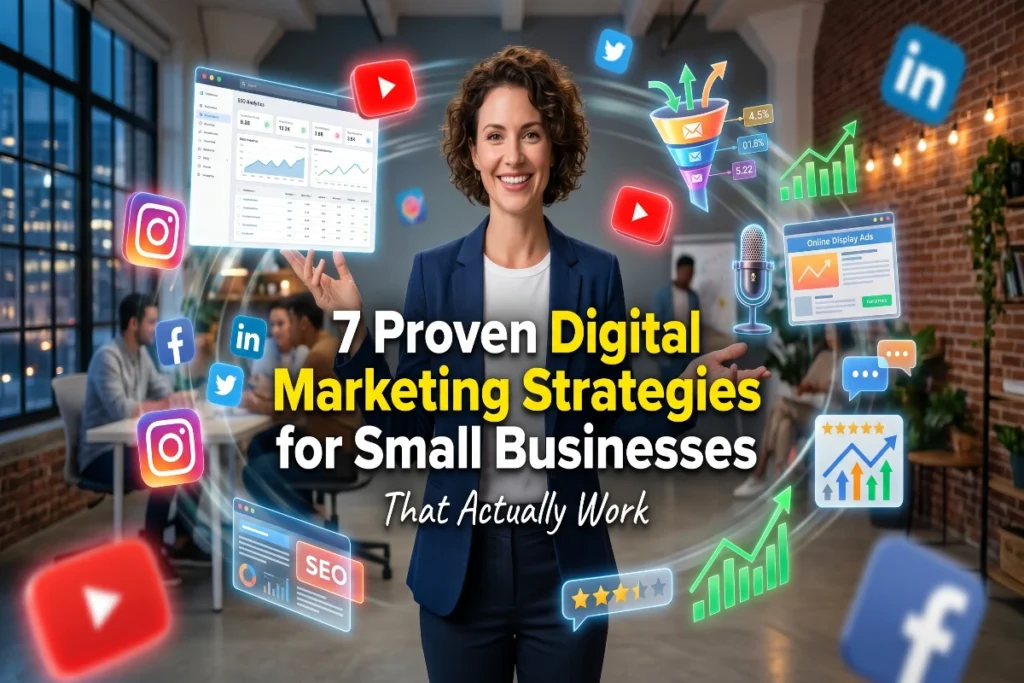
Chatbots, A/B funnels, TikTok trends — none of these deserve your attention right now. The digital marketing strategies that move the needle for small businesses are the unglamorous ones. Here are seven of them, with practical guidance on executing each.
In this article
- Mastering Blogging with SEO Intent
- Maximizing Growth with YouTube Video Marketing
- Strategic Social Media Marketing
- Amplifying Reach with Podcast Appearances
- Email list building
- Community & forums
- Paid advertising done right
68%
3x
$42
Evaluating and implementing modern digital marketing strategies for small businesses requires cutting through the noise of fleeting internet trends. While major corporations can afford to burn capital on experimental media campaigns, smaller companies must focus exclusively on predictable, high-yield tactics that directly impact the bottom line. By prioritizing utility and consistent execution over viral gimmicks, small operations can systematically out-pace heavily funded competitors in search results and customer acquisition.
1. Mastering Blogging with SEO Intent

A business blog that only covers internal company news and minor milestones functions as little more than a public diary. Unless you already have a massive, fiercely loyal audience, nobody is going to find or read it. To turn your blog into a growth engine, you need to align your content with high-impact digital marketing strategies for small businesses.
The fix is simple: write about the exact pain points your target customers are actively searching for online. For instance, if you sell computer components, your audience is typing specific queries like “why is my computer slow” or “how to speed up my PC” into search engines every single day.
Each of these topics gives you a golden opportunity to solve a real-world problem while naturally introducing your products or services. A sluggish computer might just need a RAM upgrade, a faster SSD, or a new CPU. By walking readers through a helpful diagnostic guide, you establish trust and seamlessly position your inventory as the ultimate solution.
How to Find High-Converting Keywords
Uncovering what your audience wants doesn’t have to be guesswork. By utilizing robust tools like Semrush or Google Search Console, you can easily map out your content plan. If you are working with a tight budget, you can also leverage a curated selection of the 10 best free SEO tools for small businesses in 2026 to discover high-value terms without upfront costs.
Start with a Seed: Enter a broad term related to your niche (e.g., “real estate” or “PC repair”).
Filter for Questions: Look at the “Questions” or “Matching Terms” reports to see exactly what your audience is asking.
Target Low Difficulty: Filter by lower keyword difficulty (KD) to target low-hanging fruit and build early search authority.
Analyze Search Volume: Don’t ignore smaller numbers. A keyword with just 500 monthly searches can drive thousands of highly targeted annual visits if you rank on page one.
Pro Tip: Prioritize long-tail keywords (four or more words) because they signal high user intent. Someone searching for “best RAM upgrade for a gaming laptop under $100” is ready to buy. Someone searching just for “RAM” is usually just browsing. For a complete step-by-step framework on identifying these patterns, check out our deep dive on how to do keyword research for free to maximize your content strategy
When planning your editorial calendar, it is essential to view content creation through a commercial lens. Effective digital marketing strategies for small businesses do not focus on vanity metrics like raw traffic volume; instead, they target transactional and informational search intent that leads directly to conversions. Every blog post should serve as a permanent digital asset that continuously answers user questions, solves explicit problems, and shortens the customer’s decision-making cycle.
Furthermore, scaling an organic footprint relies heavily on topical authority rather than isolated posts. Rather than publishing scattered articles on random industry topics, sustainable digital marketing strategies for small businesses require building deep content hubs. By creating a comprehensive pillar page and linking it to multiple specific, supporting long-tail articles, you signal to search engine crawlers that your platform is a trusted, comprehensive resource within your market niche.
ntegrating intentional blogging into your broader digital marketing strategies for small businesses allows you to earn free, consistent, and compounding organic traffic. Unlike paid advertising, this traffic keeps delivering value long after you hit publish.
2. Maximizing Growth with YouTube Video Marketing
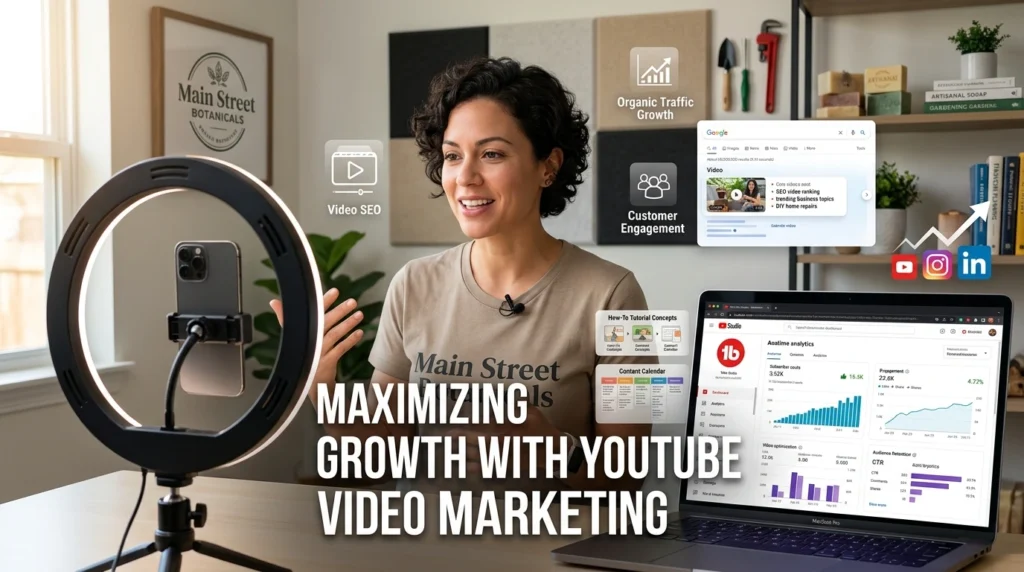
YouTube functions as the world’s second-largest search engine, serving billions of users looking to solve real-world problems daily. Despite its massive reach, it remains one of the most underutilized digital marketing strategies for small businesses looking to capture high-intent traffic.
The core approach here perfectly mirrors text-based SEO blogging: pinpoint exactly what your target audience is searching for, produce genuinely helpful videos addressing those needs, and naturally position your products or services as the solution.
For instance, a boutique makeup retailer creating a “makeup application for beginners” tutorial can seamlessly insert affiliate or direct product links in the description box. Similarly, a financial advisor detailing “how to open a Roth IRA” can funnel viewers toward a personalized consultation landing page. Even a neighborhood plumber demonstrating “how to fix a leaky tap” builds immense local trust, turning viewers into paying service clients when a larger issue arises. Integrating video production into your overall digital marketing strategies for small businesses guarantees you build an authentic connection with your community.
Transitioning from text to video allows you to humanize your brand while capitalizing on high-intent consumer behavior. Many actionable digital marketing strategies for small businesses lose traction because they fail to capture the visual attention of modern audiences who prefer video over text. Producing clear, straightforward video walk-throughs allows you to demonstrate your operational expertise in real time, breaking down complex topics into digestible visual segments.
This multi-media approach does not require professional studio gear or massive production budgets to be highly effective. In fact, the most successful video-driven digital marketing strategies for small businesses leverage basic smartphones and clear audio to deliver raw, authentic value. Focus your production energy entirely on answering the exact consumer queries identified during your research phase, ensuring your video directly solves the viewer’s problem within the first 60 seconds.
Strategic YouTube Keyword Research
Uncovering lucrative video topics requires looking at data rather than guessing. By utilizing reliable software like Ahrefs or Google Trends, you can filter specifically for video search data to find high-performing terms. When selecting a topic, ensure it meets these critical criteria:
Educational Intent: Focus heavily on queries containing phrases like “how to,” “step-by-step tutorial,” or “best way to.”
Visual Value: Ensure the topic truly benefits from a visual walkthrough. If a viewer needs to see it to understand it, video is superior to text.
Balanced Metrics: Seek out search terms that exhibit steady monthly volume coupled with low-to-medium competition.
Modern SEO Advantage: Google frequently surfaces video carousels directly at the top of its traditional search engine results pages (SERPs). Crafting a highly optimized video allows you to secure premium real estate on both Google and YouTube simultaneously, effectively doubling your organic visibility with a single piece of content. Leveraging video platforms is easily one of the most scalable digital marketing strategies for small businesses aiming to compete with larger brands
3. Strategic Social Media Marketing

Many brands stumble on social media by making two costly mistakes: trying to maintain a presence on every single platform and posting nothing but constant sales pitches. Both of these habits drain valuable resources and alienate your audience. When evaluating high-impact digital marketing strategies for small businesses, a focused approach always yields better results.
Pick One Platform and Go Deep
Cultivating an engaged community demands sustained, focused effort. Spreading your energy thin across five different networks guarantees you will never build real momentum anywhere. Instead, identify the single platform where your target demographic spends most of their time and master it first.
B2B and Professional Services: LinkedIn or X (formerly Twitter) are ideal for networking and B2B lead generation.
Food, Interiors, Fashion, and Lifestyle: Instagram or Pinterest excel at showcasing beautiful, aspirational imagery.
Local Service Businesses: Facebook remains highly effective for community engagement and local word-of-mouth.
Technical Niches (Development, Marketing, Finance): X is perfect for sharing quick industry insights and joining timely conversations.
Cater to Platform Context
Users don’t open TikTok to read long-form whitepapers, nor do they browse Pinterest for corporate news. To maximize your reach, you must align your content format with the psychological intent of the user on that specific network.
YouTube: Educational how-to guides, comprehensive deep-dives, and narrative-driven entertainment.
Facebook: Quick-strike videos, daily stories, and highly shareable content that triggers an emotional connection.
X (Twitter): Rapid-fire industry tips, real-time commentary, and direct professional dialogue.
Pinterest: High-quality inspirational imagery, step-by-step visual guides, and educational infographics.
Success across social channels is fundamentally determined by consistency and authentic conversation rather than algorithmic manipulation. The core problem with standard digital marketing strategies for small businesses on social platforms is the tendency to broadcast non-stop promotional graphics that offer zero real value to the end user. To build a highly profitable network, focus your limited time on publishing native, platform-specific content that educates your target buyers and inspires them to share your insights with their own professional connections.
4. Amplifying Reach with Podcast Appearances
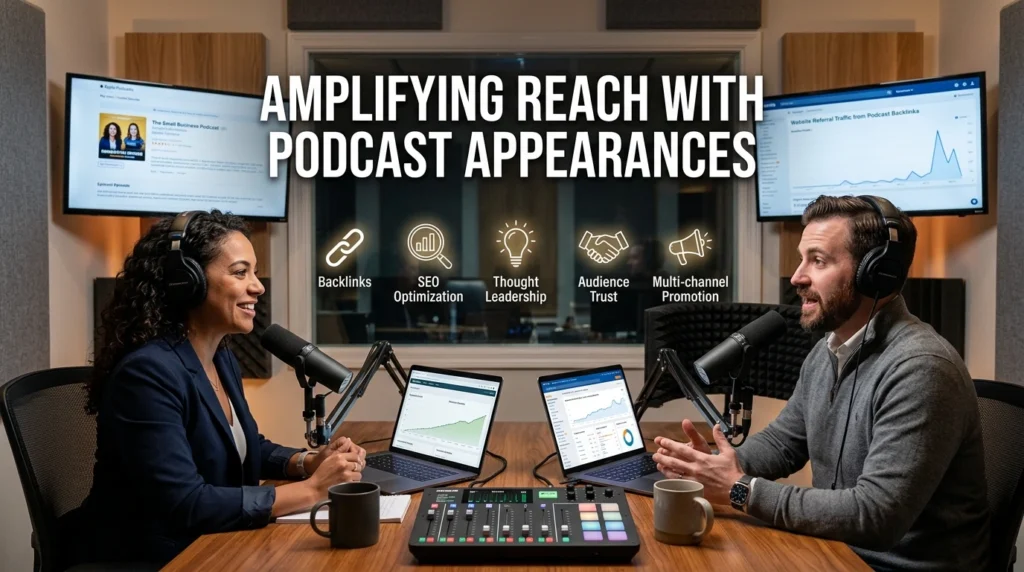
Launching a branded podcast is a long-term play. It demands upfront equipment investments, technical editing skills, and months of consistent publishing to cultivate a loyal listenership. Fortunately, there is a much faster shortcut to integrate into your digital marketing strategies for small businesses: land guest spots on established shows.
According to data-driven insights from HubSpot, audio content consumption continues to soar, making podcast audiences incredibly receptive to industry experts. Hosts are constantly hunting for knowledgeable guests. You do not need to be a celebrity to get booked; you simply need verifiable field experience, a sharp perspective, and actionable advice that elevates the host’s audience.
Guest hosting allows you to borrow the credibility and audience of established industry leaders without spending months building an audience from scratch. When reviewing low-cost digital marketing strategies for small businesses, podcast outreach stands out because it instantly places you in front of highly engaged, niche-specific communities. Each appearance serves as a long-form interview where you can showcase your problem-solving frameworks and drive high-intent listeners back to a dedicated landing page.
This strategy also acts as a powerful multi-channel asset that feeds into your text-based search marketing. Authoritative podcast hosts routinely publish detailed show notes on their own websites, providing you with high-quality, relevant editorial backlinks. Integrating podcast guesting into your broader digital marketing strategies for small businesses creates a natural loop where offline networking directly enhances your online search engine authority.
How to Find and Secure Podcast Opportunities
Finding the right shows to pitch is a straightforward process when you use a competitor-backlink approach:
Identify Industry Influencers: Find a respected peer in your niche who regularly appears as a guest on various podcasts.
Analyze Their Backlink Profile: Paste their website URL into a backlink analysis tool (like Ahrefs or Semrush), set the search mode to “URL,” and open their Backlinks report.
Filter for Episode Pages: Look for links where the influencer’s name appears directly in the page title. This quickly highlights individual podcast show notes and episode pages.
Track Social Links: Run the same analysis using their social media profile URLs to uncover podcasts that linked to their social accounts instead of their website.
Once you have built a curated list of relevant shows, craft a personalized pitch. Do not send a generic company overview or a dry resume. Instead, offer the host three specific, actionable talking points that will make their audience smarter or more successful. Hosts book guests who deliver immediate educational value, not individuals simply hunting for self-promotion.
Implementing podcast guesting is one of the most cost-effective digital marketing strategies for small businesses to earn authoritative backlinks and build immediate industry credibility. If off-page optimization is a major priority for your brand, combine this tactic with our complete beginner’s guide on how to build backlinks to establish a diverse, highly resilient link profile.
5. Email List Building
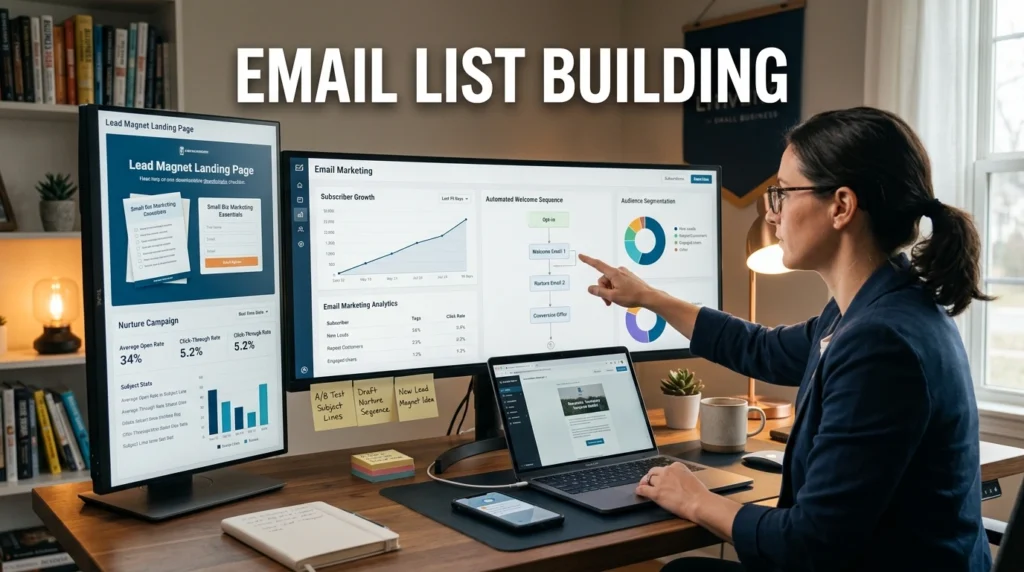
Relying solely on social media means you are building your brand on rented land. Sudden algorithm shifts, unexpected account restrictions, or platform policy updates can erase years of hard work overnight. Conversely, an email list is an digital asset you completely own. It provides an unmediated, direct line of communication to individuals who have raised their hands and explicitly asked to hear from you.
When deploying comprehensive digital marketing strategies for small businesses, building a list is critical—but remember that quality trumps quantity. An engaged segment of 500 subscribers who eagerly open your messages will always generate more revenue than a stale list of 10,000 users who do not remember signing up.
Once an individual joins your subscriber base, your primary objective shifts from acquisition to continuous nurture. Far too many digital marketing strategies for small businesses treat email collection as an end-state goal, leaving subscribers stranded with zero communication for weeks at a time. To maximize the long-term lifetime value of your list, set up an automated welcome sequence that instantly delivers your best educational resources and frames your core commercial offerings.
Effective segmentation ensures your messages remain highly relevant and avoids driving up your unsubscribe rates. Advanced digital marketing strategies for small businesses use subtle tags based on opt-in behavior to divide lists into specific consumer profiles. Delivering hyper-targeted content based on a subscriber’s exact problems ensures your open rates remain high while creating a highly predictable engine for recurring revenue.
How to Grow an Engaged Email Asset
Fuel the Funnel with Traffic: Prioritize high-quality organic traffic. Content marketing and SEO blogging serve as the most reliable long-term growth engines to attract a highly relevant audience.
Offer a Compelling Lead Magnet: Give readers a clear reason to subscribe. Offer a downloadable checklist, an exclusive mini-course, or an actionable guide that solves a specific problem.
Optimize Form Placement: Keep your opt-in forms noticeable but respectful. Subtle end-of-article slide-ins and dedicated footer forms convert highly without disrupting the user experience.
Nurture Early and Often: Do not wait until your list reaches an arbitrary size to start broadcasting. Treat your first 50 subscribers with the exact same dedication and value as you would your first 5,000.
Maintaining a regular email cadence with useful, concise information turns your subscriber base into one of the most predictable drivers of traffic and sales available in modern digital marketing strategies for small businesses.
6. Forums and Community Boards

Platforms such as Reddit, Quora, and targeted industry groups are digital hubs where your prospective buyers go to troubleshoot problems. However, these communities possess strict cultural norms; heavy-handed, tone-deaf self-promotion is quickly identified, downvoted, and banned.
The Organic Community Formula
To successfully extract value from forums, you must adopt a community-first mindset. Lead with comprehensive, insightful answers that display your technical expertise.
According to search insights from Search Engine Journal, search engines increasingly prioritize authentic, human-generated discussions in search results, making community participation a vital sub-component of modern digital marketing strategies for small businesses. Understanding this shift is essential, especially as you adapt your overall content footprints to align with how AI search engines work in 2026 for long-term visibility.
Only drop links to your own website when the resource naturally extends your explanation and adds genuine context to the reader. Over time, this consistency compounds. Dedicating time to answering questions on Quora or Reddit builds an authoritative profile that can generate thousands of recurring monthly views completely passively.
Pro Tip: Always utilize custom UTM parameters when linking from community boards. Tracking your traffic allows you to pinpoint exactly which threads drive the highest engagement, letting you double down on the platforms that move the needle.
Engaging in community-driven marketing provides an unvarnished look at consumer frustrations, which can instantly refine your overall product offering. The absolute best digital marketing strategies for small businesses do not treat forums as mere link-dropping playgrounds; they treat them as live focus groups. Monitoring trending threads on Reddit or industry boards allows you to uncover emerging customer pain points before your larger, slower competitors even realize they exist.
This real-time market intelligence can be funneled directly back into your core editorial roadmap. When you notice a specific question frequently resurfacing across multiple online communities, it signals a clear gap in available search engine content. Addressing these community-driven insights within your primary digital marketing strategies for small businesses allows you to capture highly valuable, first-mover search rankings while providing immediate answers to active users.
7. Paid Advertising—Done Right
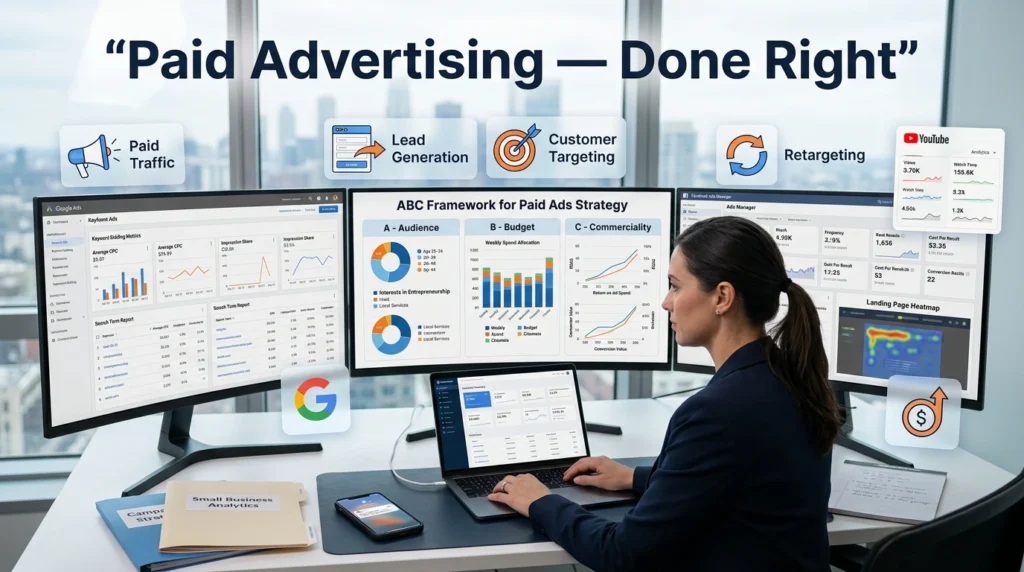
Paid media is by no means off-limits for growing companies, but throwing capital at an ad network simply because a competitor claimed it worked is a fast track to draining your capital. Before allocating a single dollar of your budget, you must ground your campaigns in the ABC framework of paid customer acquisition. Understanding this system is vital when deploying digital marketing strategies for small businesses to ensure every ad dollar yields a positive return.
A — Audience
Always launch campaigns on platforms where your ideal buyers actively spend their time. For example, a men’s premium grooming brand dedicating its entire budget to Pinterest—where the global user base is roughly 70% female—is wasting resources from day one. Conduct deep demographic research before committing any financial resources.
B — Budget
Pay-per-click (PPC) marketing runs on competitive, auction-based pricing models. High-intent keywords on Google Ads can easily cost $15 to $30 every time a user clicks. For a modest $1,000 monthly ad spend, that pool equates to a mere 33 to 66 clicks. If your landing page conversion rate cannot support those numbers, pivot your attention toward long-tail, lower-competition phrases, or run cheaper top-of-funnel campaigns like Facebook video ads or YouTube pre-roll placements.
C — Commerciality
Align your destination landing page with the specific intent of the platform’s users. A professional typing “enterprise conference call software” into Google is in immediate buying mode; route them straight to a direct product page or demo request form. Conversely, someone browsing Pinterest for home decoration ideas is merely looking for inspiration. Send them to an educational blog post that weaves your product suggestions naturally into the text.
Key Conversion Insight: Content-led paid acquisition funnels regularly outperform aggressive, direct-to-product ads on social channels. By meeting users where they are, solving a problem first, and nurturing trust, you build a warm audience that converts at a much higher rate.
Final Thoughts
The single foundational thread connecting all of these core digital marketing strategies for small businesses is simple: stop chasing transactions and start providing real utility. Solve actual issues for your audience, deliver undeniable value through your content, and cultivate a community that genuinely looks forward to opening your messages.
Executing these organic and paid growth plays requires extreme patience and a willingness to commit to long-term data collection. The core reason traditional digital marketing strategies for small businesses fail is that owners often abandon their campaigns after just a few weeks due to a lack of immediate, explosive results. True authority, high search engine visibility, and deep consumer trust take months of systematic, daily execution to fully mature into predictable revenue pipelines.
By focusing your team’s limited energy on a unified, high-yield system, you eliminate the operational friction that kills growing brands. Building sustainable digital marketing strategies for small businesses means ignoring flashy vanity tactics and focusing entirely on channels where you can deliver undeniable utility to your core audience. Track your metrics closely, optimize your conversion touchpoints based on real-world user data, and let your content compound in value over time
Most importantly, avoid the temptation to execute all of these initiatives simultaneously. Choose a single strategy that aligns with your current staffing and capital resources, master its execution, measure the data metrics, and only then layer in the next channel. The companies that systematically compound their digital footprint over years are the ones that dominate their niches—not the ones constantly abandoning their plans to chase transient platform trends.
more article