Artificial intelligence is transforming how people search online. Instead of typing short keywords into traditional search engines, users are now asking full questions inside AI-powered tools like OpenAI ChatGPT, Google Gemini, Perplexity AI Perplexity, and Anthropic Claude.
This shift is changing the entire SEO industry.
Today, ranking on Google alone is no longer enough. Your website also needs visibility inside AI-generated answers, citations, recommendations, summaries, and conversational search results.
But how do AI search engines actually work?
How do they generate answers, choose citations, retrieve information, and decide which brands to recommend?
More importantly:
How can your website appear inside AI search results consistently?
In this complete guide, you’ll learn:
- What AI search engines are
- How large language models (LLMs) work
- How Retrieval-Augmented Generation (RAG) works
- What query fan-out means for SEO
- How AI systems retrieve and synthesize information
- How citations are selected
- How personalization changes search results
- How to optimize your website for AI search engines in 202
Understanding the New Era of Search
AI search engines are next-generation, intelligent question-answering systems built on advanced Large Language Models (LLMs). While traditional search tools require you to sift through a long list of blue links to find information, these advanced platforms do the heavy lifting for you by synthesizing web data into direct, conversational answers.
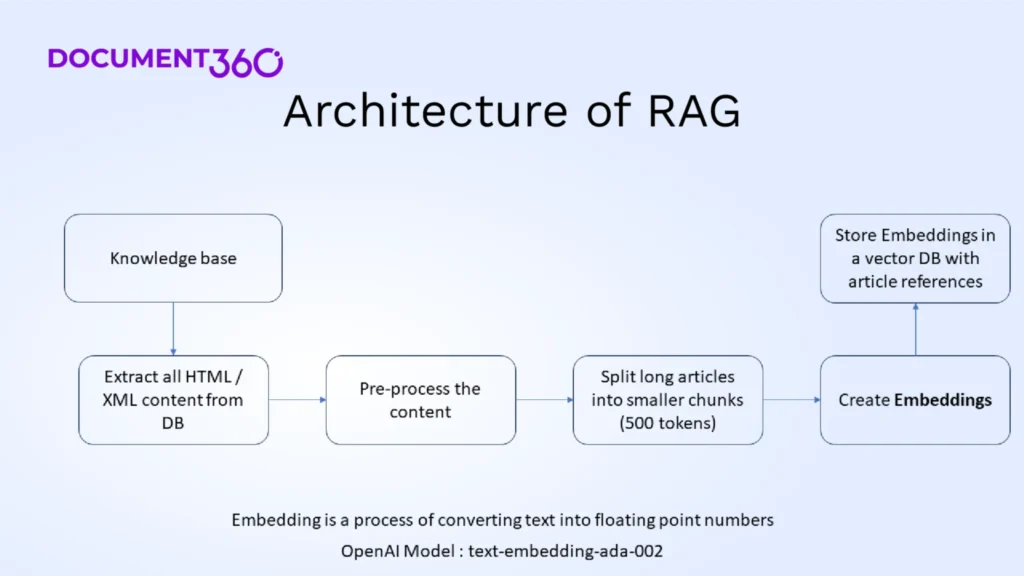
To truly grasp how AI search engines work, it helps to look at the unique architecture behind them. They blend generative AI with real-time web data through a process called Retrieval-Augmented Generation (RAG).
By checking the visual breakdown above, you can see that the system takes a user’s question, converts it into mathematical embeddings to understand user intent, fetches the most relevant context from live web indexes, and uses text completion models to generate a coherent answer.
Leading AI Search Platforms
Several innovative platforms are driving this shift in user behavior:
OpenAI ChatGPT (with search enabled)
Google Gemini
Microsoft Copilot
Perplexity AI
Anthropic Claude
The Core Technology Under the Hood
The magic behind how AI search engines work relies on a multi-layered tech stack working simultaneously in milliseconds:
Large Language Models (LLMs): To comprehend complex human language and generate natural text.
Real-Time Web Retrieval: Traditional search indexes that crawl and fetch live information from across the internet.
AI Ranking Algorithms & Grounding: Systems that sort the retrieved pages for accuracy and cross-reference data to prevent AI hallucinations.
According to a deep dive on search technology by the IBM Technology Blog, integrating live retrieval systems with generative models bridges the gap between static training data and the living web. The final result is a fluid, intuitive search experience driven by semantic context rather than rigid keyword matching.
Traditional Search vs AI Search
The shift from classical search algorithms to generative AI marks a massive evolution in how we access information online. Understanding this shift requires looking under the hood of both technologies to see exactly how processing models have transformed.
Traditional Search: The Keyword Index
Standard search engines like Google or Bing operate as giant matching indexes. They continuously crawl the web, catalogue pages, and use mathematical ranking algorithms to display a list of blue links. When you type a fragmented query like best headphones gym, the engine matches those exact keywords against its index, leaving you to click through multiple websites to piece together your own answer.
The New Paradigm: How AI Search Engines Work
Instead of forcing users to hunt through links, next-generation platforms fundamentally change the discovery process. The mechanics behind How AI Search Engines Work rely on understanding natural language intent rather than just tracking static keywords.
When you ask a complex, conversational question—such as “What are the best over-ear headphones for workouts under $200 with strong bass and sweat resistance?”—the underlying framework swings into action.
To deliver a direct, conversational response, these systems follow a specific multi-step process:
Intent Parsing: The system decodes your conversational prompt, identifying key constraints (e.g., price ceiling, specific audio profile, physical durability).
Subquery Generation: It breaks the prompt down into multiple parallel micro-searches to scan the web efficiently.
Contextual Retrieval: Using modern frameworks like Retrieval-Augmented Generation (RAG), the platform fetches highly specific, real-time data data from diverse live sources.
Synthesis and Citation: A Large Language Model (LLM) combines the findings into a single, comprehensive answer, clearly citing its references so you can verify the information instantly.
This creates an interactive, iterative experience where you can ask follow-up questions naturally, completely changing our relationship with online information.
How Large Language Models (LLMs) Work
Understanding how AI search engines work is essential for staying ahead in the digital landscape. Modern search is no longer just about matching keywords; it is about context, entities, and real-time data retrieval.
Here is a deep dive into the mechanics of AI-driven search, from the underlying models to the strategy of entity SEO.
At the core of understanding how AI search engines work is the technology that drives them: Large Language Models (LLMs). These models undergo massive training phases using extensive datasets to comprehend human language.
The training corpus includes:
Millions of websites, blogs, and public forums
Digital books and academic research papers
Complete public web archives
Major datasets like Common Crawl and Wikipedia teach the AI language patterns, contextual relationships, and entity connections, transforming raw data into conversational intelligence.
Why Brand Mentions Matter in AI Search
When exploring how AI search engines work, you quickly realize they operate by recognizing entities (people, places, things, and concepts). Your brand’s footprint across the web directly dictates your visibility in AI-generated answers.
If your company is consistently associated with high-intent industry terms like:
“Best enterprise SEO tools”
“Top project management platforms”
“Most secure analytics software”
AI systems synthesize this data and are far more likely to recommend your business to users. This shift makes semantic, entity-based optimization a critical ranking strategy.
What Is Entity SEO?
Entity SEO is the practice of defining your brand’s digital identity so AI systems can easily understand who you are, what you offer, and how authoritative you are in your niche.
Key optimization methods include:
Structured Schema Markup: Giving search engines explicit data about your organization.
Consistent Brand Mentions: Building an un-linked or linked footprint on authoritative sites.
Knowledge Panel Optimization: Claiming and updating your official entity profiles.
Topical Authority: Writing deep, interconnected content blocks rather than isolated posts.
The Core Limitations of LLMs
To truly grasp how AI search engines work, we must also examine the architectural constraints of the language models themselves.
1. AI Models Are Probabilistic
LLMs predict the most likely next word in a sequence rather than pulling static records from a hard drive. Because they operate on mathematical probabilities, the same prompt can yield different answers over time. This makes AI search dynamic and means traditional, static rank tracking is less reliable.
2. LLMs Have Knowledge Cutoffs
Traditional LLMs are trained on fixed snapshots of the internet. They do not automatically know about your product launch yesterday or breaking news unless they are actively paired with a live web index.
3. AI Hallucinations
Because they focus on language patterns rather than pure facts, LLMs can confidently invent statistics or cite fictional sources. This phenomenon is known as hallucination.
What Is Grounding in AI Search?
To combat hallucinations and provide accurate information, developers utilize a process called grounding. This is a fundamental component of how AI search engines work safely today.
[User Query] ➔ [Live Web Search] ➔ [Extract Fresh Results] ➔ [LLM Synthesizes & Cites Data]
Grounding relies heavily on Retrieval-Augmented Generation (RAG). Instead of relying solely on pre-trained memory, the search engine fetches real-time data from the live web and feeds it to the LLM. This combination ensures the final output is accurate, fresh, and properly cited.
How Retrieval-Augmented Generation (RAG) Works
To build a successful digital presence, marketers must understand the mechanics of Retrieval-Augmented Generation (RAG) and query expansion. These systems fundamentally change how content is discovered, evaluated, and presented to users.
Here is a breakdown of the technical processes driving modern search, and how you can optimize your content to align with how AI search engines work.
The Mechanics of Retrieval-Augmented Generation (RAG)
When analyzing how AI search engines work, RAG stands out as the bridge between static AI memory and the live, evolving web. This technical architecture ensures that answers are not just creative guesses, but are backed by verified, real-time facts.
The step-by-step process operates through a highly structured pipeline:
[User Input] ➔ [Confidence Check] ➔ [Live Web Index Search] ➔ [Document Extraction] ➔ [AI Synthesis & Citations]
User Query Input: A user types a specific question into the search interface.
Confidence Evaluation: The AI analyzes its pre-trained internal knowledge base to see if it can fully answer the question with absolute certainty.
Live Web Retrieval: If internal data is insufficient or outdated, the system launches a live query across search indexes like Google or Bing.
Document Extraction: The engine pulls the top ranking web pages and extracts the most relevant text fragments.
Synthesis & Citation: The LLM merges these fresh web fragments with its language capabilities to write a coherent response, embedding direct citations back to the source sites.
When Do AI Systems Trigger a Live Web Search?
AI platforms do not crawl the live web for every single interaction. To conserve computing power, live retrieval is highly situational.
AI engines typically initiate the RAG process for:
Time-Sensitive Content: Breaking news events, stock market movements, or recent industry shifts.
Commercial Intent: E-commerce product recommendations, price comparisons, or software tool lists.
Technical Updates: Evolving data points, such as search engine algorithm changes or newly released code documentation.
Fact Verification: Complex prompts requiring hard scientific data, statistical backing, or historical citations.
Example: A prompt like “What is photosynthesis?” can be answered accurately using the model’s static training data. However, asking “What are the latest Google ranking factors?” immediately forces a live web search because the system requires fresh data.
Decoding Query Fan-Out: The New Frontier of SEO
One of the most transformative elements of how AI search engines work is a behavior known as query fan-out (or query variant generation).
When a user enters a complex prompt, the AI does not just search for that exact string of text. Instead, it acts like a human researcher, breaking the primary question down into a collection of smaller, interconnected sub-queries.
Query Fan-Out in Action
Consider a scenario where a user types this single prompt:
“Build an SEO strategy for a SaaS startup”
Behind the scenes, the AI expands this single thought into a multi-query search to gather comprehensive context:
┌── "SaaS SEO strategy examples"
├── "B2B content marketing framework"
[User Prompt] ────┼── "Technical SEO checklist for software sites"
├── "SaaS keyword research methods"
└── "Topical authority content funnel"
The system runs these parallel searches simultaneously, scrapes the top results for each sub-query, and synthesizes the findings into one definitive guide.
Why Query Fan-Out Changes Your SEO Strategy
This shift completely rewrites the rules of on-page optimization. Because of query expansion, trying to optimize a webpage for a single, isolated keyword is a failing strategy. The AI looks for deep, holistic answers that satisfy the broader topical ecosystem.
To capture visibility within this framework, your brand must adapt to advanced search architecture:
Target Search Intent Over Strings: Focus on the underlying problem the user is trying to solve, addressing the natural follow-up questions they are likely to ask next.
Build Comprehensive Topic Clusters: Instead of writing standalone blog posts, construct deeply linked content hubs that cover a main topic from every conceivable angle.
Prioritize Semantic Relevance: Incorporate naturally related concepts, synonyms, and subtopics into your content. This ensures that no matter which direction the AI’s query fans out, your pages stand out as the most authoritative resource.
For a deeper dive into modern crawling, indexing, and quality guidelines, review the official Google Search Essentials documentation.
AI Search Still Depends on Traditional Search Engines
Traditional search engines haven’t disappeared; they have simply evolved. Modern artificial intelligence platforms don’t browse the live web independently. Instead, they rely on existing search indexes to gather real-time information.
| AI System | Primary Search Source |
| ChatGPT | Bing |
| Gemini | |
| Copilot | Bing |
| Claude | Brave |
| AI Overviews |
Because of this infrastructure, standard technical optimization remains critical. Securing a top rank in Google, Bing, or Brave directly dictates your visibility in AI-generated answers. Understanding how AI search engines work requires shifting your focus from keyword density to structural clarity.
The Retrieval Process: How AI Reads Your Content
AI platforms do not process an entire webpage at once. Instead, they use a process called semantic chunking to break text down into distinct informational blocks.
These chunks typically consist of:
A few highly focused paragraphs
Specific definitions
Supporting statistics or data points
When a user inputs a prompt, the algorithm evaluates these chunks mathematically. To optimize for how AI search engines work, content must be structured so that every section provides standalone value. If a paragraph relies too heavily on vague context from three sections prior, the AI may skip it entirely during the retrieval phase.
Why Chunking Changes Content Strategy
Because algorithms digest information in fragments, your writing style must adapt. The goal is to eliminate fluff and prioritize immediate, contextual answers.
What to include: Clear subheadings, concise definitions, direct answers to user intent, structured data, and bulleted summaries.
What to avoid: Long-winded introductions, filler text, and scattering answers across multiple ambiguous paragraphs.
Answer Synthesis and Citation Selection
Once the relevant chunks are pulled from various websites, the AI does not simply copy and paste them. It synthesizes the data by comparing multiple sources, resolving contradictions, and rewriting the final answer in natural language.
[User Prompt] ➔ [Index Search] ➔ [Chunk Extraction] ➔ [AI Synthesis] ➔ [Final Response + Citations]
According to documentation on Google Search Central, search algorithms prioritize helpful, reliable, and people-first content. To earn a coveted citation link within an AI response, your content must meet four specific criteria:
Relevance: The extracted text must directly substantiate the AI’s claim.
Authority: The domain must possess strong trust signals and quality backlinks.
Freshness: The information must be up-to-date, especially for time-sensitive queries.
Diversity: AI models prefer citing a variety of perspectives rather than relying on a single domain.
Step-by-Step Optimization for AI Visibility
To align your website with how AI search engines work, implement this optimization sequence:
1.Build Deep Topical Authority:Phase 1: Content Strategy.
Create comprehensive content hubs. Instead of short, isolated posts, build out extensive guides that cover primary topics, adjacent subtopics, and granular FAQs on a single page.
2.Deploy Specific Schema Markup:Phase 2: Technical SEO.
Apply structured data to help bots parse your data architecture instantly. Prioritize Article, FAQ, Organization, and Product schemas to give clear context to search crawlers.
3.Maintain Content Freshness:Phase 3: Maintenance.
Establish a strict update schedule. Refresh older statistics, update outdated timestamps, and refine conclusions to ensure your content remains attractive to real-time retrieval bots.
The Impact of Hyper-Personalization
A major factor in how AI search engines work is the fluid nature of their outputs. Traditional search engine optimization focused on static keyword rankings. AI search, however, is heavily personalized based on user data:
Past conversational history and explicit user preferences
Exact geographical location and local time
Device type and specific system instructions
For instance, a query like “best coffee shops near me” submitted by a user in Johannesburg will yield an entirely different set of sources, data points, and citations than the exact same prompt entered by someone in London.
Because responses are probabilistic rather than deterministic, tracking a single keyword rank is no longer a viable metric. Marketers must focus on aggregate visibility, overall citation frequency, and consistent brand mentions across the broader web index.

The Future of AI SEO
AI search is still evolving rapidly.
But several trends are already clear:
Traditional SEO Still Matters
Google rankings still strongly influence AI retrieval.
Entity SEO Is Growing
Brands with strong semantic authority perform better.
Content Quality Is Critical
Thin AI-generated content will struggle.
Topical Authority Wins
Comprehensive topic coverage beats isolated pages.
Structured Data Helps AI Understanding
Schema markup improves machine readability.
AI SEO Strategy for 2026
Here’s the practical roadmap for ranking in AI search engines.
1. Build Topic Clusters
Create connected content around core themes.
2. Strengthen Entity Signals
Use:
- Schema markup
- Author bios
- Consistent branding
- External mentions
3. Publish Original Research
Unique data increases citation potential.
4. Optimize for Retrieval
Use:
- Clear headings
- Concise sections
- FAQ formatting
- Semantic structure
5. Earn High-Authority Backlinks
Focus on quality over quantity.
6. Update Content Frequently
Freshness matters in AI retrieval systems.
Final Thoughts
AI search engines are fundamentally changing how information is discovered online.
But despite the hype, the foundations remain surprisingly familiar.
The websites most likely to succeed in AI search are usually the same websites that already perform well in traditional SEO:
- Helpful content
- Strong authority
- Clear structure
- Trusted backlinks
- Topical depth
- Strong entities
The future of SEO is not replacing traditional optimization.
It is expanding it.
Businesses that combine traditional SEO with AI-focused optimization strategies will dominate search visibility in 2026 and beyond.