

If you’re a blogger struggling to get traffic, you are not alone.
Thousands of bloggers publish content daily—but only a small percentage actually get meaningful traffic from Google.
Why?
Because most bloggers focus only on writing content, not optimizing it strategically.
In 2026, blogging success is no longer just about publishing articles.
It’s about building a system that helps you:
- Rank on Google faster
- Attract targeted readers
- Improve page speed
- Optimize user experience
- Convert visitors into loyal readers
And the good news?
You don’t need advanced SEO knowledge.
You just need two powerful strategies:
👉 Long tail keyword optimization
👉 Image optimization (compression + resizing)
When combined correctly, they can dramatically help you get more blog traffic—even if your blog is new.
Why Most Bloggers Struggle to Build an Audience
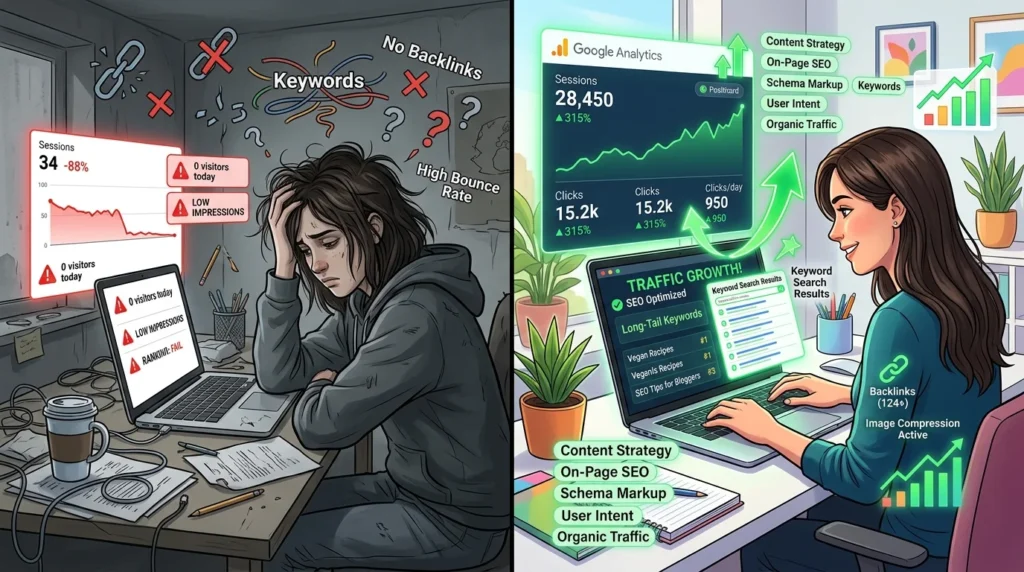
Understanding the roadblocks to success is the first step toward growth. If you are wondering why your site feels like a ghost town, it usually boils down to a lack of strategy rather than a lack of talent. Many creators find it difficult to get more blog traffic because they treat their website like a diary rather than a data-driven platform.
Common Pitfalls That Kill Your Reach
Most bloggers fail to gain momentum because they fall into the same recurring traps:
Targeting “Impossible” Keywords: Beginners often chase high-volume terms dominated by massive media outlets. Without a high domain authority, your post ends up on page ten of search results.
Misunderstanding Search Intent: If someone searches for “how to bake bread,” they want a recipe, not a 3,000-word history of wheat. If your content doesn’t answer the user’s specific “why,” you won’t get more blog traffic from Google.
Poor Technical Performance: Uploading massive, uncompressed images slows your site to a crawl. In an era of three-second attention spans, a slow site ensures users bounce before they even read your first sentence.
Skipping the Essentials: SEO isn’t just about keywords; it’s about structure. Ignoring meta descriptions, alt text, and internal linking makes it nearly impossible for search bots to index your content effectively.
The Missing Link: A Structured Growth Strategy
When your posts don’t rank and your dashboard shows zero visitors, it’s natural for your motivation to plummet. However, the real issue isn’t your writing—it’s your framework.
To consistently get more blog traffic, you must move away from “spray and pray” publishing. Successful bloggers use keyword analysis tools to find low-hanging fruit and implement a structured traffic strategy that prioritizes user experience and search engine visibility. Without a roadmap, you are essentially driving in the dark; with one, every post becomes a long-term asset that brings in readers while you sleep.
The Proven Blueprint to Scale Your Readership
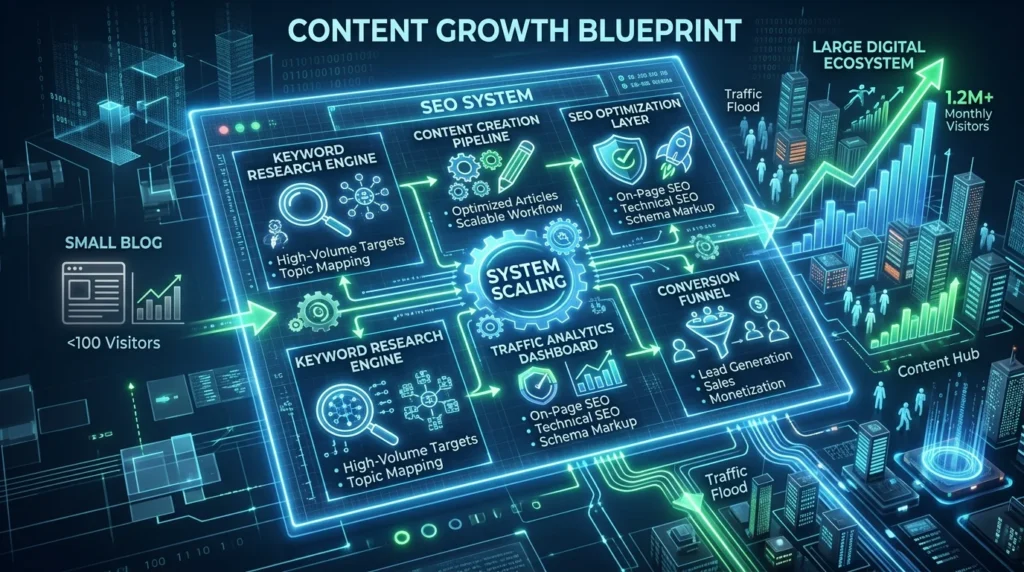
Scaling a blog from zero to thousands of monthly visitors isn’t a matter of luck; it’s a matter of mechanics. If you want to get more blog traffic, you need to stop guessing what your audience wants and start building a high-performance content engine. By focusing on three core pillars, you can move your site from the depths of search results to the coveted first page.
1. Master the Art of Keyword Selection
The foundation of any successful site is the research behind it. Instead of fighting for broad, high-competition terms, the fastest way to get more blog traffic is by targeting “long-tail” keywords. These are specific phrases—usually three or more words—that have lower search volume but much higher intent. Because fewer big brands are competing for these niche topics, your well-written post has a much higher chance of ranking at the top almost immediately.
2. Craft Content That Search Engines Love
Optimization is about more than just repeating a phrase. To truly get more blog traffic, your content must be structured for both humans and bots. This means using clear headings, short paragraphs, and bullet points to improve readability. When you provide a comprehensive answer to a user’s query in an easy-to-digest format, Google recognizes your authority and rewards you with better positioning.
3. Prioritize Speed and Technical Health
User experience is a massive ranking factor. A sluggish website is the quickest way to lose a potential fan. To ensure you get more blog traffic and keep it, you must optimize your technical performance. This includes:
Resizing Images: Never upload a raw 5MB file when a 100KB version looks just as good.
Compression: Use modern formats like WebP to keep your site snappy.
Mobile Responsiveness: Ensure your blog looks flawless on every device.
When you combine strategic keywords, high-quality writing, and a lightning-fast technical setup, the results are inevitable. Your bounce rate will drop, your dwell time will increase, and you will finally see that consistent upward trend in your analytics.
Step 1: Mastering Long-Tail Keywords for Exponential Growth

If you want to move the needle on your analytics, you have to start at the foundation: your keyword strategy. Most creators stay stuck in a cycle of low visibility because they try to compete for broad terms that are already dominated by massive corporations. To truly get more blog traffic, you need to pivot your focus toward specificity.
Understanding the Power of Long-Tail Keywords
Long-tail keywords are highly specific search phrases that typically contain three or more words. Unlike “head terms” which are broad and vague, long-tail phrases reflect exactly what a user is looking for at that moment.
Consider these differences:
Broad/Short-Tail: “SEO” or “Blogging” (Extremely high competition).
Long-Tail: “best ways to increase blog traffic fast in 2026” or “how to get more blog traffic using free SEO tools.”
While the broad terms might have a higher total search volume, they are nearly impossible for a new or mid-sized blog to rank for. Long-tail keywords, however, allow you to capture a dedicated audience that is looking for the exact answers you provide.
Why Specificity is Your Secret Weapon
Focusing on these longer phrases is the most effective way to get more blog traffic because they align perfectly with modern search behavior. Here is why they work:
Lower Competition: Fewer websites are targeting these specific queries, making it much easier for you to claim a spot on the first page of Google.
Higher Conversion Rates: A reader searching for a specific solution is much more likely to subscribe to your newsletter or buy a product than someone just browsing general topics.
Faster Ranking: Because the “keyword difficulty” is lower, search engine bots can categorize and rank your content much faster than if you were fighting for a generic term.
| Keyword Type | Example | Difficulty | Intent |
| Short Tail | blog traffic | Very High | Navigational / General |
| Long Tail | how to get more blog traffic for beginners | Low | Informational / Actionable |
Leveraging a Long-Tail Keyword Analyzer
To find these “hidden gems,” successful digital marketers use a long-tail keyword analyzer. These tools help you peel back the layers of search data to discover what your audience is actually typing into that search bar. By identifying low-competition phrases with decent volume, you can build a content calendar that guarantees growth.
Using this data-driven approach is one of the fastest, most reliable ways to consistently get more blog traffic and establish your authority in your niche. Stop guessing what people want to read and start writing exactly what they are already searching for.
Step 2: Building a Foundation: Crafting Content That Ranks
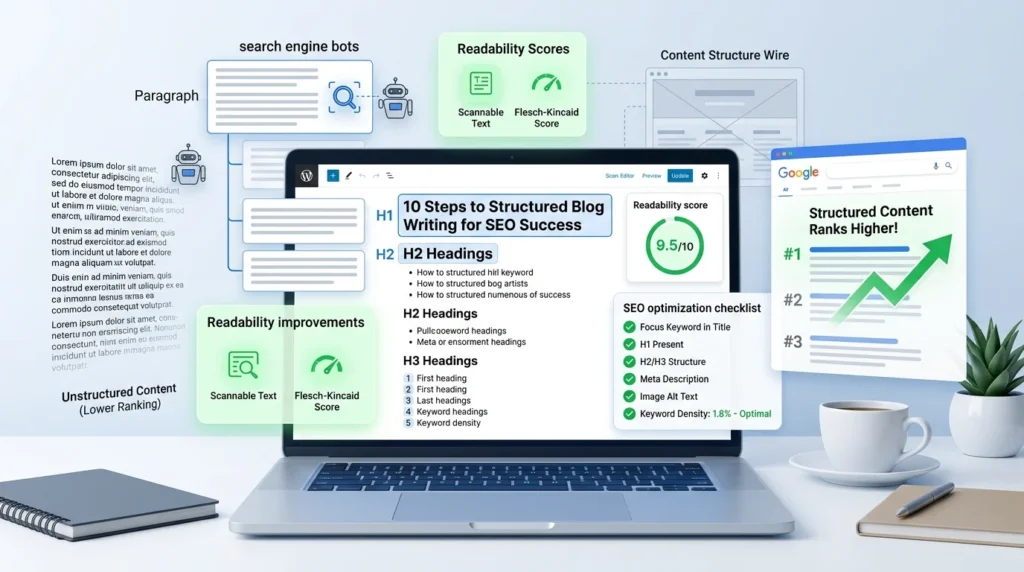
Choosing the right keywords is only half the battle. If you want to get more blog traffic, you must present your information in a way that search engines can understand and readers can enjoy. Even the most insightful advice will go unread if it is buried in a confusing, unorganized layout. High-quality content isn’t just about the words you choose; it’s about the structural “skeleton” that holds everything together.
The Anatomy of a High-Traffic Blog Post
A well-optimized post uses a clear hierarchy to guide the reader through the topic. By organizing your thoughts correctly, you make it easier for Google to index your page and for users to find the specific answers they need. To get more blog traffic, follow this proven structural blueprint:
The H1 Header: Your title should clearly state the main topic and include your primary keyword. This is the first thing bots and humans see.
H2 Subheadings: Use these to break your post into major sections. They act as a roadmap for the reader.
H3 Subheadings: These are perfect for supporting details, specific steps, or list items within your main sections.
Visual Breaks: Incorporate bullet points, numbered lists, and comparison tables. These elements make your content “scannable,” which is vital for keeping mobile users engaged.
Writing for Clarity and Search Intent
The modern reader has a very low tolerance for “fluff.” To get more blog traffic, your writing style must be direct and focused. Instead of intimidating your audience with dense walls of text, use short paragraphs—no more than three to four sentences each. This creates “white space,” which reduces eye strain and improves the overall user experience.
Every sentence should serve a purpose. Before you hit publish, ask yourself: “Does this directly answer the search intent of my target audience?” If someone is looking for a quick tutorial, don’t force them to read a long personal anecdote first. By providing immediate value and maintaining a high level of clarity, you reduce your bounce rate and signal to search engines that your page is a top-tier resource.
Consistently applying these SEO-optimized structural habits is a surefire way to get more blog traffic while building a loyal, returning audience that trusts your expertise.
Step 3: Image Optimization to Get More Blog Traffic
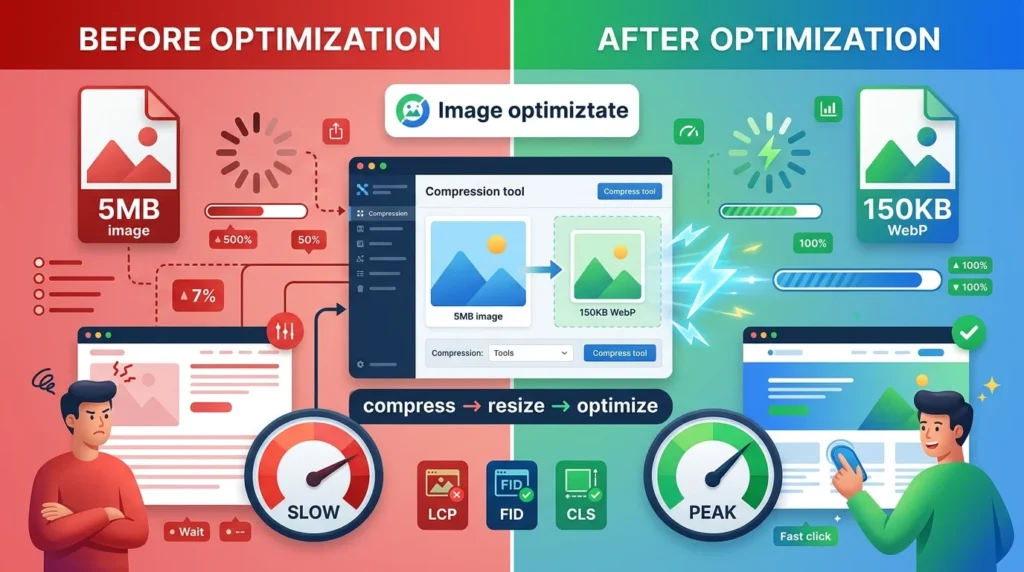
Visual content is essential for storytelling, but if handled incorrectly, it can become your blog’s greatest liability. Many creators focus so much on their prose that they forget how heavy media files can sabotage their ability to get more blog traffic. In the eyes of search engines like Google, a slow website is an unusable website. By optimizing your images, you aren’t just making your site look better—you are fundamentally improving its technical SEO.
Why Image Heavy-Weights Drag Down Your Growth
Google’s ranking algorithms place a massive emphasis on “Core Web Vitals,” which measure the speed and stability of your pages. When you upload unoptimized images, you risk three major setbacks:
Plummeting Page Speed: High-resolution files take longer to fetch from the server.
Sky-High Bounce Rates: Modern readers won’t wait more than two or three seconds for a page to load; they will simply click away.
Mobile Penalties: Since the majority of web browsing happens on phones, a heavy page can decimate your mobile rankings and make it harder to get more blog traffic from smartphone users.
The Professional Image Optimization Workflow
To ensure your visuals contribute to your success rather than hindering it, you should follow a strict optimization process. To get more blog traffic consistently, every image you upload should pass through these two stages:
1. Resize for Maximum Efficiency
Most cameras and stock photo sites provide images that are 4000 pixels wide or more. However, most blog containers are only 800px to 1200px wide. Uploading a massive file only to have your website scale it down is a waste of bandwidth. Always use an image resizer to match the actual display dimensions of your site.
2. Compress Without Losing Quality
Once the dimensions are correct, use an image compressor tool. These tools remove unnecessary metadata and optimize the pixel data to shrink the file size dramatically. Your goal is to take a 5MB “giant” and turn it into a 150KB – 200KB “featherweight.”
| Image Condition | Typical File Size | User Experience | Impact on SEO |
| Unoptimized | 5MB – 10MB | Frustratingly Slow | Negative Ranking |
| Optimized | 100KB – 250KB | Instant & Smooth | Positive Boost |
By prioritizing these technical tweaks, you create a seamless experience that encourages visitors to stay, read, and share. Mastering the balance between high-quality visuals and lightning-fast performance is a crucial step for anyone looking to get more blog traffic and maintain a professional online presence.
Step 4: Improve Page Speed (SEO Ranking Factor)
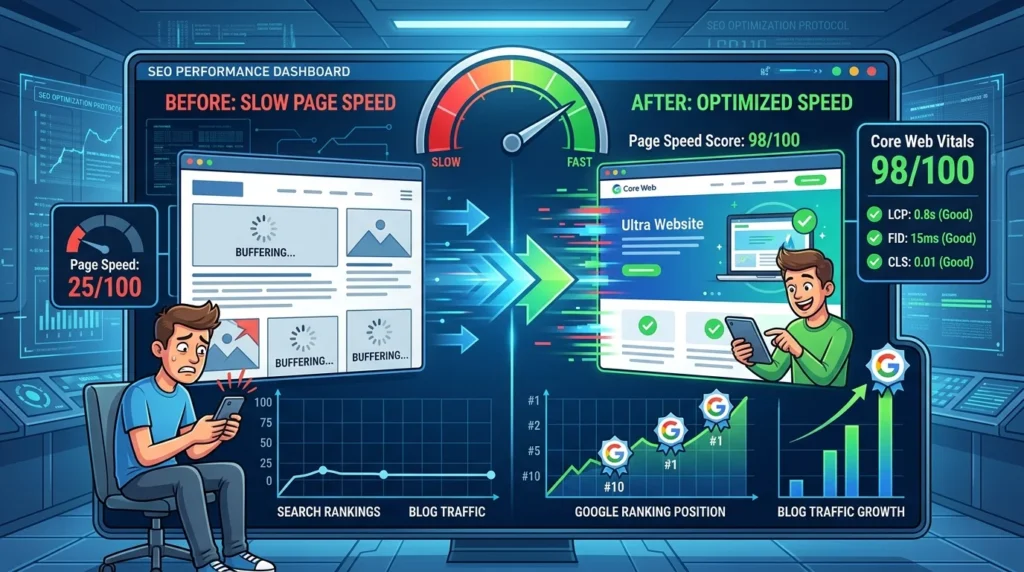
In the digital landscape of 2026, speed is no longer just a luxury—it is a primary ranking factor. Google has made it incredibly clear that user experience is paramount, and nothing ruins that experience faster than a lagging website. If your goal is to get more blog traffic, you must view your page load time as a vital component of your content strategy. A slow blog is essentially a “closed” sign to potential readers, driving them back to the search results before they’ve read a single word.
Why Speed Dictates Your Traffic Potential
When a page loads instantly, users are more likely to click through to multiple articles, increasing your pageviews and signaling to search engines that your site is high-quality. Conversely, a delay of even two seconds can increase bounce rates by over 50%. To effectively get more blog traffic, you need to satisfy the algorithms that prioritize efficiency. Faster websites naturally climb higher in the Search Engine Results Pages (SERPs) because they provide the immediate gratification that modern internet users demand.
Actionable Fixes to Accelerate Your Blog
You don’t need to be a professional developer to boost your site’s performance. By implementing a few strategic technical adjustments, you can create a lightning-fast environment that helps you get more blog traffic without changing your writing style.
Adopt Modern File Formats: Transitioning from traditional JPEGs or PNGs to WebP format can reduce image file sizes by up to 30% without sacrificing visual clarity.
Audit Your Plugins: Every plugin adds a layer of code that your server must process. To get more blog traffic, remove any “heavy” or redundant plugins that aren’t essential to your site’s core functionality.
Streamline Your Layout: Avoid overly complex themes with excessive animations or scripts. A clean, minimalist layout not only looks professional but also ensures that your content is the first thing that loads.
Leverage Browser Caching: This allows returning visitors to load your site much faster by storing certain elements locally on their devices.
By treating page speed as a pillar of your SEO, you aren’t just checking a box for Google; you are respecting your reader’s time. This technical discipline, combined with great content, is the most reliable way to get more blog traffic and maintain a competitive edge in any niche.
Step 5: Internal & External Linking Strategy

Content doesn’t exist in a vacuum. To search engines, your website is part of a vast web of information, and the way you connect your pages—and link to others—determines how much authority you command. If you want to get more blog traffic, you need to master the art of the internal and external link. Think of links as the bridges that allow both users and search engine crawlers to navigate your expertise seamlessly.
The Power of Internal Linking
Internal linking is perhaps the most underrated tactic to get more blog traffic. By linking one of your articles to another related post on your site, you keep readers engaged longer. This “dwell time” signals to Google that your content is valuable, which can lead to higher rankings.
Create Topical Clusters: If you write a guide on SEO, link it to your specific tutorials on keyword research or image optimization.
Guide the User Journey: Use internal links to lead readers from a broad “how-to” post toward your deeper, more specialized tool pages or case studies.
Distribute “Link Juice”: When one of your posts performs exceptionally well, linking from that high-traffic page to newer posts helps them rank faster.
Building Trust Through External Authority
While it might seem counterintuitive to send readers away from your site, linking to high-authority external sources is a critical trust signal. When you back up your claims with data from industry leaders, you demonstrate that your blog is well-researched and credible. To get more blog traffic, you should align yourself with the most trusted names in the digital space.
For example, referencing the Google Search Central Documentation provides a bedrock of technical truth for your readers. Similarly, pointing toward deep-dive data, such as the Ahrefs guide to long-tail keywords, adds a layer of professional validation to your advice.
Finding the Right Balance
A great linking strategy isn’t about stuffing every sentence with a URL. It is about adding genuine value. When you provide a path for readers to explore a topic more deeply—whether on your own site or via a reputable external source—you improve the user experience. This user-first mindset is exactly what is required to get more blog traffic and turn one-time visitors into loyal, long-term followers. By building these digital bridges, you ensure that search engines can easily map out your site’s relevance and reward you with the visibility you deserve.
Step 6: Content + Image + Keyword Strategy Together
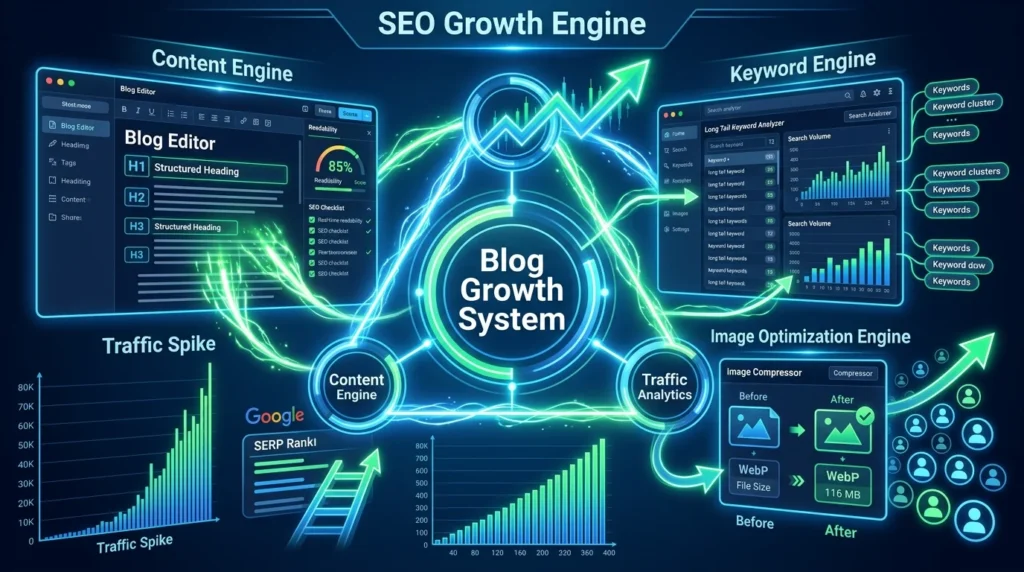
Understanding individual tactics is helpful, but the real magic happens when you integrate these elements into a repeatable workflow. To get more blog traffic in a sustainable way, you cannot view SEO, content creation, and technical performance as separate tasks. Instead, they must function as a unified system where each part strengthens the others. When you execute a holistic strategy, you aren’t just hoping for clicks; you are architecting a high-performance digital asset.
The Ultimate Traffic Growth Checklist
To ensure every piece of content you produce has the maximum potential to succeed, follow this streamlined “Traffic Growth System” before you hit the publish button:
Identify the Opportunity: Use a keyword analyzer to find a specific long-tail keyword that your audience is actively searching for.
Build the Narrative: Write a comprehensive blog post that solves the user’s problem better than any other result currently on page one.
Optimize the Skeleton: Use H1, H2, and H3 tags to create a logical structure that makes the page easy for search bots to crawl.
Enhance the Visuals: Resize and compress every image to ensure they add value without sacrificing your site’s loading speed.
Connect the Dots: Insert internal links to your other relevant posts and external links to authoritative industry sources to build credibility.
Analyze and Pivot: Once published, monitor your performance using search console data to see how you can further refine your approach to get more blog traffic.
Why This Integrated Approach Wins
The reason this system is the most effective way to get more blog traffic is that it addresses every major ranking factor simultaneously.
Relevance: Your use of targeted keywords ensures you are appearing for the right queries.
Quality: Your structured, deep-dive content satisfies the “Helpful Content” updates from search engines.
Speed: Optimized images and lean layouts keep your Core Web Vitals in the green.
User Experience (UX): A fast, readable, and well-linked site keeps readers engaged, reducing bounce rates and increasing trust.
By treating your blog as a machine where keywords are the fuel and site performance is the engine, you eliminate the guesswork. This disciplined approach is how modern creators get more blog traffic and maintain their lead in an increasingly competitive digital world.
How to Successfully Get More Blog Traffic
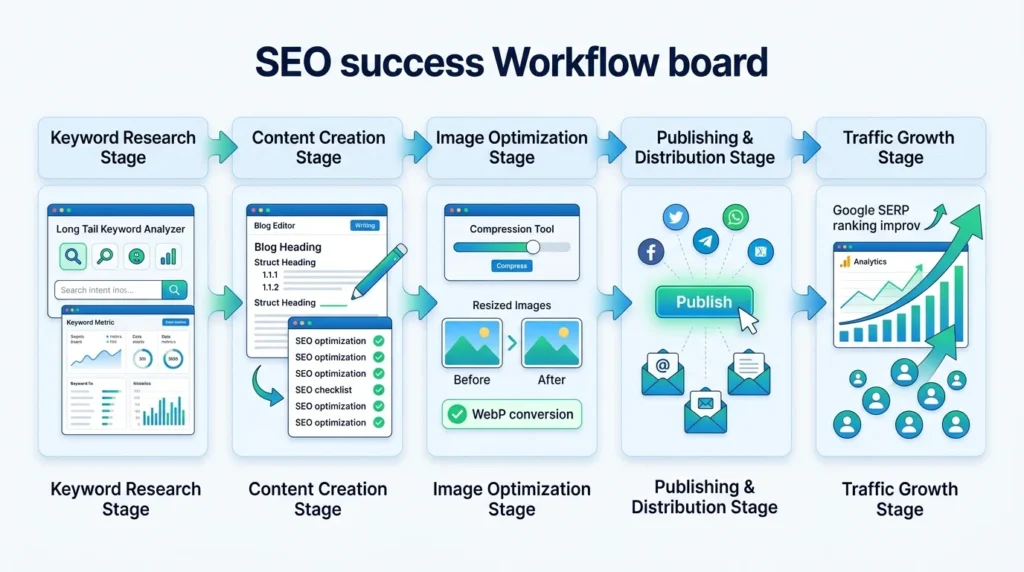
In the saturated world of digital content, simply hitting “publish” and hoping for the best is no longer a viable strategy. If you want to stand out, you need a repeatable system designed to get more blog traffic through precision and optimization. Success isn’t about luck; it’s about leveraging the right workflows to ensure your voice reaches the right ears.
Let’s look at a practical, real-world workflow. Suppose your goal is to dominate a specific niche, such as “how bloggers get more blog traffic using SEO tools.” To turn this idea into a high-performing asset, you must follow a disciplined step-by-step process:
Strategic Keyword Analysis: Before writing a single word, use a keyword analyzer to identify search volume and competition levels. This ensures you aren’t shouting into a void but answering questions people are actually asking.
Drafting High-Value Content: Craft an SEO-optimized blog post that prioritizes the reader’s intent. By providing deep value, you increase dwell time, which signals to search engines that your site is an authority.
Visual Optimization: Enhance the user experience by adding relevant, high-quality images. However, raw files can slow down your site. Always compress your images to maintain lightning-fast loading speeds—a critical factor for those looking to get more blog traffic in a mobile-first world.
Strategic Distribution: Once you publish, the work has only just begun. Share your content across social platforms and email newsletters to jumpstart your engagement metrics.
🎯 The Results of a Targeted Strategy
When you treat your blog like a technical product rather than just a diary, the data begins to shift in your favor. By following this structured approach to get more blog traffic, you will notice three primary shifts:
Faster Ranking: Search engines index and reward optimized content much quicker than generic posts.
Increased Organic Clicks: A well-optimized meta description and title tag lead to a higher Click-Through Rate (CTR).
Sustainable Growth: Unlike paid ads, SEO provides a “compounding interest” effect, leading to consistent, long-term traffic growth.
Implementing these steps is the most effective way to get more blog traffic while building a brand that lasts.
Avoiding Mistakes That Kill Your Growth
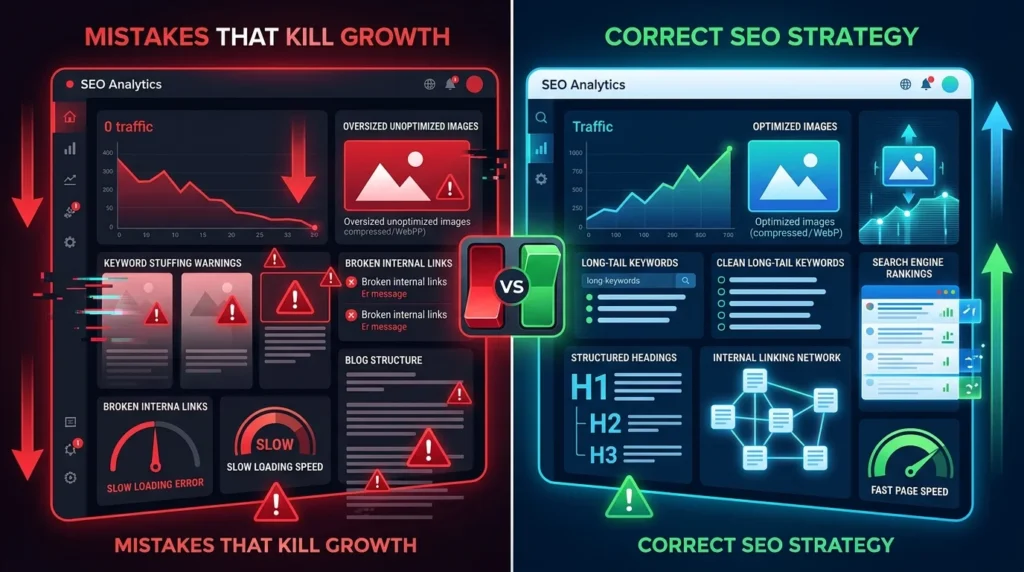
Building a successful online presence is as much about what you don’t do as it is about your active strategy. Many creators work tirelessly but fail to get more blog traffic because they fall into common technical and structural traps that signal “low quality” to search engine algorithms. If your numbers have plateaued, it is time to audit your workflow for these growth-killing errors.
🛑 The Strategic Blunders
Chasing Impossible Keywords: One of the quickest ways to stall your progress is targeting only high-competition keywords. If you are a rising creator, competing with massive media conglomerates is a losing battle. To get more blog traffic, focus on the “sweet spot”—long-tail keywords with high relevance and manageable competition.
Neglecting Technical SEO: Ignoring image optimization and settling for slow page speeds are silent killers. Large, uncompressed images bloat your load times, causing users to bounce before they even read your first sentence. Search engines prioritize user experience; if your site is sluggish, you simply won’t rank.
Poor Structural Integrity: Writing without structure or proper formatting (like H2 and H3 tags) makes your content unreadable for both humans and bots. Furthermore, a lack of internal linking prevents search engines from crawling your site effectively and keeps readers from discovering your other valuable posts.
🛑 The Content Quality Gap
The “Post and Forget” Fallacy: Thinking your job is done once you hit publish is a mistake. No content updates mean your information becomes stale. To consistently get more blog traffic, you must revisit old posts to refresh data, fix broken links, and keep the content evergreen.
Over-Optimization: Modern algorithms are sophisticated. Using tactics like keyword stuffing or “thin” content will get you penalized rather than promoted. The goal is to write for humans first, ensuring your primary focus keyword appears naturally and provides genuine context to the topic.
By identifying and correcting these hurdles, you clear the path for your site to finally get more blog traffic and reach the audience your hard work deserves. Consistent, clean, and technically sound content is the only way to ensure long-term visibility in an increasingly competitive digital landscape.
Advanced Strategies to Get More Blog Traffic
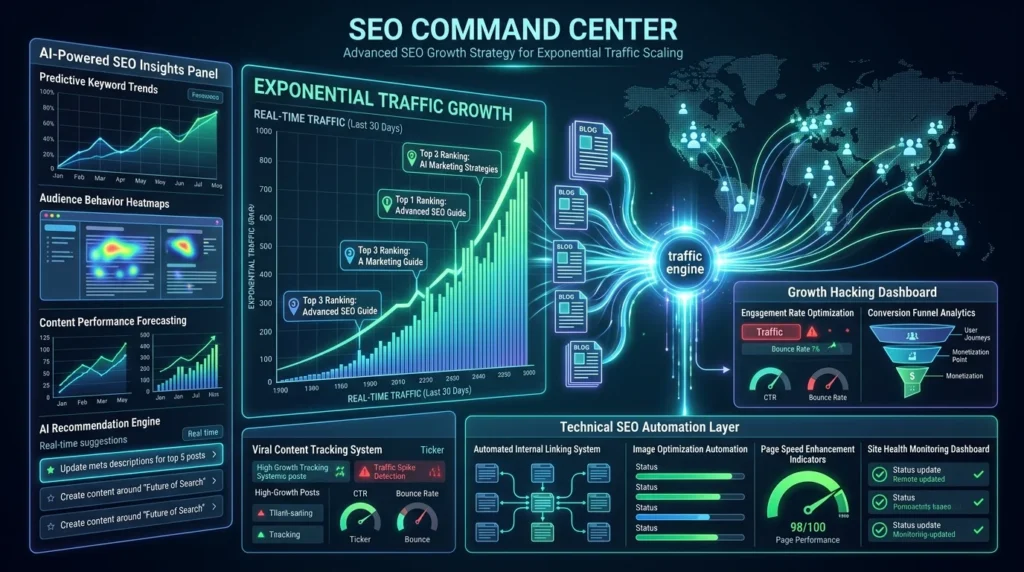
Success in the digital space isn’t just about volume; it is about strategy and precision. While many beginners focus on broad, high-level topics, those who truly understand how to get more blog traffic know that the “pro” approach requires a blend of technical discipline and human-centric writing. By refining your process, you can move from stagnant numbers to exponential growth.
🚀 Strategic Content Optimization
The foundation of any successful growth plan starts with targeting. Instead of competing for generic terms, focus on long-tail keywords first. These specific, multi-word phrases often have lower competition and much higher conversion rates because they match the exact intent of the searcher. When you solve a specific problem, you are far more likely to get more blog traffic that actually sticks around.
Additionally, technical hygiene is non-negotiable. One of the simplest yet most effective tips is to keep images under 200KB. Large media files are the primary cause of slow page speeds, and a slow site is an invisible site. By optimizing your assets, you ensure a seamless user experience that keeps both readers and search engine crawlers happy.
🛠️ Sustainable Growth Tactics
To maintain a competitive edge and continue to get more blog traffic over time, you must move beyond the “one and done” mentality:
Clean Formatting: Use plenty of white space, bullet points, and concise paragraphs. If a reader can’t skim your content, they won’t stay.
Write for Humans: Algorithms are now designed to mimic human preferences. If you write for bots, you’ll end up with robotic, unengaging text. Write naturally, provide value, and the rankings will follow.
Audit and Revive: Don’t let your archives gather dust. Improve old blog posts by updating statistics, adding new insights, and refreshing the SEO metadata. This is often the fastest way to get more blog traffic without creating entirely new content from scratch.
Data-Driven Decisions: Use analytics to track keyword performance. Knowing exactly which terms are driving visitors allows you to double down on what works and pivot away from what doesn’t.
By treating your blog as a living, breathing ecosystem, you create a sustainable path to success. These professional habits ensure that you don’t just reach an audience once, but rather build a loyal following that returns again and again.
Why This Growth Framework Works
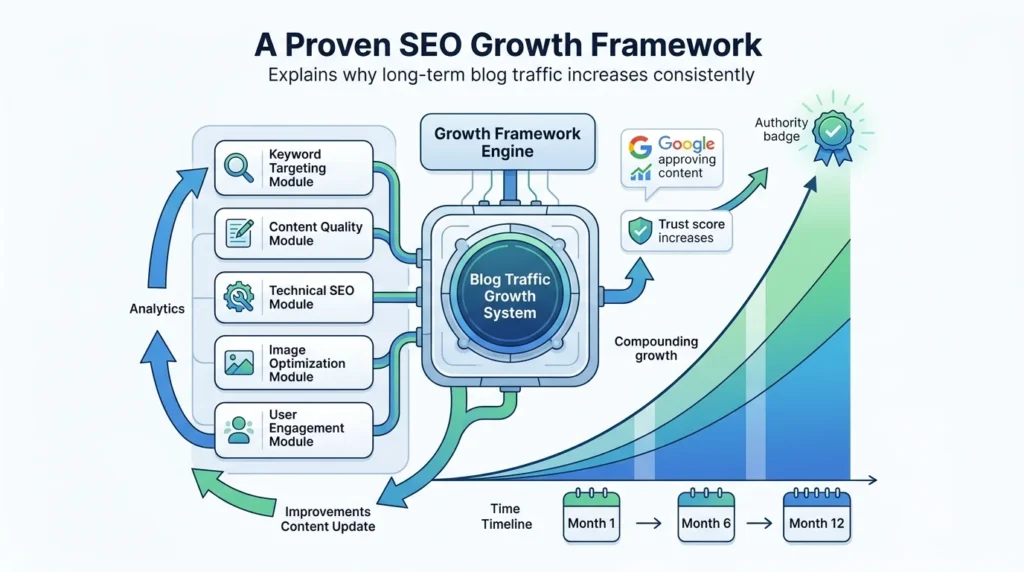
In the fast-paced world of digital marketing, finding a strategy that actually delivers results can feel like chasing a moving target. However, the combination of targeting long-tail keywords and rigorous image optimization remains one of the most effective ways to build a sustainable online presence. When you align your technical performance with high-intent content, you don’t just see a temporary spike; you create a foundation that helps you get more blog traffic month after month.
🌟 Transformative Advantages for Your Platform
Adopting this specialized approach offers a ripple effect of benefits that go far beyond simple numbers. Here is how this strategy transforms your site:
Accelerated Search Visibility: By focusing on specific, niche phrases, you face less competition, allowing your content to rank faster on Google. This early momentum is essential for new and growing sites alike.
Superior User Experience: Image optimization ensures your pages load in the blink of an eye. In a world of short attention spans, speed is the ultimate currency. When your site is fast and responsive, it becomes much easier to get more blog traffic through word-of-mouth and repeat visits.
Deepened Audience Engagement: When your content is easy to find and pleasant to read, users stay longer. Higher dwell times signal to search engines that your information is valuable, creating a virtuous cycle of visibility and engagement.
Established Industry Authority: Consistently appearing at the top of search results for specific queries builds trust. As you become a go-to resource in your niche, you naturally get more blog traffic because users begin to seek out your brand specifically.
Predictable Growth Patterns: Unlike the unpredictability of social media “going viral,” an SEO-led strategy focuses on growing consistent visitors. You move away from the “feast or famine” cycle and toward a steady, upward trajectory of organic discovery.
By committing to these core principles, you are doing more than just chasing an algorithm; you are building a high-performance digital asset. The ultimate goal is to get more blog traffic that is highly relevant, engaged, and ready to convert, ensuring your efforts lead to long-term success.
Frequently Asked Questions
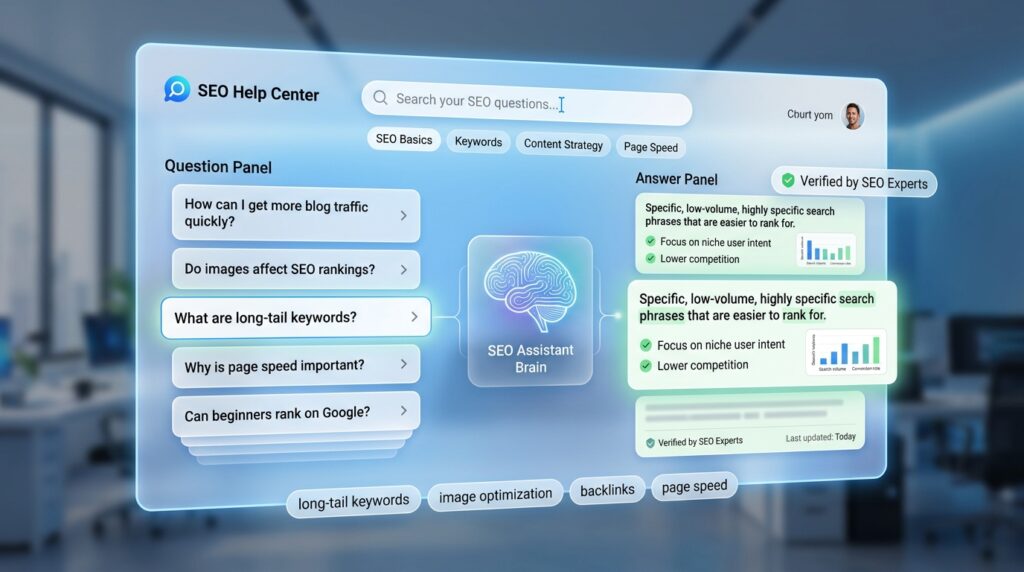
Navigating the complexities of search engine visibility can be daunting, especially when you are trying to find the most efficient path to growth. To help you get more blog traffic, we have compiled answers to the most common questions regarding site performance and content strategy.
1. How can I get more blog traffic quickly?
While organic growth is typically a long-term play, the fastest way to see results is to focus on long-tail keywords and aggressive image optimization. By targeting specific search queries with lower competition, your content can climb the rankings much faster than it would for broad terms. Additionally, ensuring your technical SEO is sound—such as having fast load times—helps search engines index and reward your pages sooner.
2. Do images affect my ability to get more blog traffic?
Absolutely. High-quality visuals are essential for engagement, but if they aren’t optimized, they become a liability. Large, uncompressed image files are the primary reason for slow page speeds. When a page takes too long to load, users bounce, and Google may lower your ranking. Optimizing your images is a direct lever you can pull to improve your user experience and overall visibility.
3. What is a long-tail keyword analyzer?
A long-tail keyword analyzer is a specialized digital tool designed to find specific, multi-word phrases that users are searching for. These tools help you identify “low-hanging fruit”—keywords that have decent search volume but aren’t yet dominated by massive authority sites. Using these insights is a proven way to get more blog traffic by filling content gaps that others have overlooked.
4. Why is page speed so critical for ranking?
In a mobile-first world, speed is a core ranking factor. Faster websites provide a better user experience, which leads to higher engagement and lower bounce rates. If your site is sluggish, even the best content won’t be enough to get more blog traffic, as search engines prioritize sites that deliver information quickly and efficiently.
5. Can beginners realistically get more blog traffic?
Yes, absolutely. You don’t need a massive budget to succeed. By using proper SEO strategies, focusing on niche topics, and utilizing free optimization tools, beginners can compete with established players. Consistency and a focus on technical health are the two biggest factors in helping a new site grow its audience from scratch.
Final Thoughts: Turning Strategy Into Growth
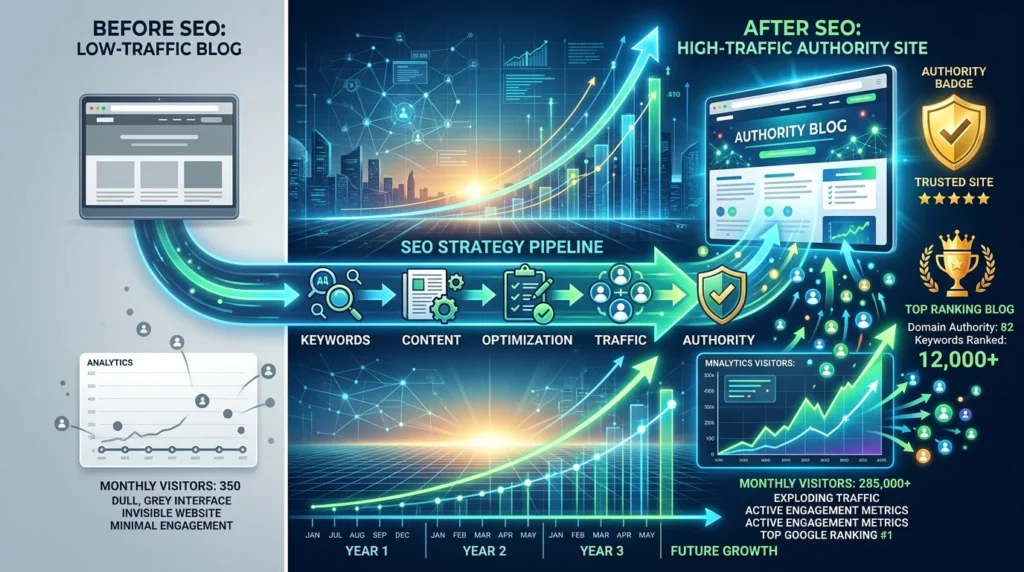
Mastering the digital landscape doesn’t require secret formulas or expensive consultants. If your ultimate goal is to get more blog traffic, the most effective path forward is rooted in simplicity and technical discipline. By shifting your focus from “more content” to “better-optimized content,” you create a sustainable ecosystem where every new post serves as a powerful magnet for your target audience.
The Power of a Consistent System
The journey to a high-ranking website is built on a handful of core pillars. When you move away from guesswork and embrace a structured system, you begin to see a measurable shift in your metrics. To get more blog traffic, you must prioritize:
Data-Driven Research: Use keyword tools to understand exactly what your audience is searching for before you start writing.
Precision Targeting: Focus on long-tail keywords. These specific phrases allow you to rank for high-intent searches where users are looking for immediate answers.
Technical Excellence: Never underestimate the impact of image optimization and fast-loading pages. A fast site is a foundational requirement for anyone who wants to get more blog traffic in a competitive market.
From Invisible to Discoverable
When you combine these strategies consistently, your blog undergoes a significant transformation. It ceases to be an invisible corner of the internet and becomes a highly discoverable resource. Remember, SEO is a marathon, not a sprint. You don’t need to overhaul your entire site overnight; instead, start small by optimizing your next piece of content.
Stay consistent, refine your formatting, and ensure your site’s speed is top-notch. If you provide genuine value and back it up with technical health, you will naturally get more blog traffic while building an authoritative brand. The traffic you desire is waiting—you just need the right system to lead it to your door.
Latest Posts
How Pay Per Call Affiliate Marketing Works (With Real Examples)
Affiliate marketing has evolved far beyond earning commissions from product...
Read More
Most Profitable SaaS Niches in 2026 | 21 High-Growth Markets Worth Entering
SaaS Growth Strategy The global SaaS market is on a...
Read More
How SaaS Websites Make Money | 15 Proven Monetization Methods in 2026
Website Monetization & Flipping Software as a Service (SaaS) has...
Read More
Pay Per Call Marketing Exposed | 5 Powerful Steps to Effortlessly Generate High-Ticket Leads
Website Monetization & Flipping You’ve probably heard that display ads...
Read More
15 Website Monetization Strategies That Actually Work in 2026
Website Monetization & Flipping You have spent months finding keywords,...
Read More
Best SEO Tools for Agencies in 2026 | Rank Higher, Work Faster, Scale Smarter
Introduction Running a digital agency in 2026 without the right...
Read More
7 Link Building Strategies That Increase Organic Traffic and Rankings in 2026
Here is a question every website owner, SEO professional, and...
Read More
Website Monetization in 2026 | The Ultimate AI-Powered Strategy to Turn Traffic into Profit
Introduction You’re getting visitors. Maybe hundreds a day, maybe thousands....
Read More
How to Grow SaaS Revenue Without New Customers | 4 Proven Expansion Strategies
SaaS Growth Strategy 2026 Expansion & Upsell Strategies | Complete...
Read More
How to Grow a Tool Website to 10K Monthly Visitors Using Only Free Traffic Channels
You built the software. You launched the platform. Maybe you...
Read More